American Open Recap

This post is written by Jacob Tsypkin of CrossFit Monterey, who coached two female lifters. I asked him to do a write up of his experience at the American Open.  He said, “I’ll do my best to keep the boring details to a minimum and tell some stories of what I think were totally sweet lifts.”

Venue

The venue was awesome.  The hotel was very comfortable and attached to the event center, meaning it was very easy for athletes to relax the day of competition – you could easily go back to your room after weigh-in and relax.  The competition room was large and had plenty of seating, and the platform was a large stage that allowed the lifter to be easily seen from anywhere in the room.  Perhaps of greatest importance, the warm-up room was spacious and well stocked with good equipment – no one had to scramble for platforms, bars, or plates (Dynamic Eleiko provided high quality bars and plates for the event, and as far as I can tell there were no bars that weren’t in great condition.)  There was even a small area set up in the back of the warm-up room for non-competitors to get a training session in, including platforms and squat racks.

Organization

Overall, I was happy with the organization of the event.  Pretty much all the sessions ran on time.  It was easy to find everything and to get around.  Technical officials were easy to find whenever you needed them.  There were a few times that technical issues slowed a session down, but apart from that things ran pretty smoothly.

Editor’s Note: Other people have reported that they were unhappy with the organization of the event or the venue. I’m sure experiences varied. 

Judging

Those who know me know that I think the pressout rule is silly.  But rules are rules, and I coach my lifters to abide by them.  However, the absurd standards at this meet were off the chart.  First, things were inconsistent: during the B sessions on Friday night. A friend of mine who was in the audience commented that there were multiple occasions on which two lifts which seemed identical, one on platform 1, and one on platform 2, were judged differently.  I have heard it claimed that USAW wants to “enforce the standards lifters can expect in international competition.”  Well folks, in international competition the judges know that a slight bobble of the elbow upon receiving the bar in the jerk is not the same as a pressout.  They also know the difference between a shoulder and an elbow, a concept which some of the judges at the American Open seemed to find difficult to grasp.  I saw multiple lifts get red lighted for no other reason, as far as I can tell, then that they looked hard.  Everyone I discussed this with seemed to have the same opinion on the matter.

Lifts of Note

(Obviously there were more epic lifts than those lifted here; these are just the ones I came to mind.)

Some of you know/know of Ben Claridad.  His lifter CC went 77/103 in the 69kg women’s A session.  Her 103kg jerk was legitimately one of the most ridiculous lifts I’ve ever seen.  She locked the jerk out in an INCREDIBLY deep lunge, one which any lifter would have trouble recovering from.  As if that weren’t enough, her foot slipped on the stage as she brought the lift back.  This sent CC careening around the platform, backward, forward, and side to side.  Through all this, she maintained a strong lockout overhead, eventually stabilizing and getting white lights on the lift.

Also in the 69kg women’s session, 19 year old Jenny Arthur dominated the clean & jerk, opening 120kg and finishing by absolutely crushing 127kg, a new American Senior Record (she broke the junior record on her first lift.)  Let me put this into pounds, as it seems to have more impact that way for us Americans: a 19 year old girl weighing 152lbs, smoked the piss out of a 280lb clean & jerk.  I guess we should all harden the fuck up, shouldn’t we?

The “Most Reckless” award goes to my friend Kevin Cornell of Pittsburgh Barbell.  Competing in the 105kg men’s A session, Kevin snatched 145, got a bullshit red light on a beautiful 150, and went 154 anyway to try to make up some kilos.  Unfortunately he was unable to make the lift.  In the clean & jerk, Kevin missed his opener and second attempt at 185.  Having put in a decent lift in the snatch, the sensible thing to do would have been put in a third attempt at 185 to get a total.

But Kevin is not a sensible guy.  Kevin wanted a damn medal.

So he called for 190, then 193, which was a lifetime PR attempt.  For those of you who may not know how a weightlifting meet runs, you should know that this has a very significant impact: because the attempts in a weightlifting meet follow the weight on the bar, rather than the round-robin style of a powerlifting meet, not only was Kevin taking an 8kg jump after two misses, the large increase in load meant that he would have a very long break between attempts – about 12-15 minutes, since it was a very large weight class and there were a lot of attempts between 185-192.  To add to to the absurdity of this increase, Kevin did not deign to follow standard practice for such a situation.  Normally, a lifter would go into the warm-up room and work his way back up.  Perhaps take a rep at 140, then 160 to stay warm.  Kevin took two attempts with…70.  Not 170.  Actual 70.

When he stepped onto the platform, I stood watching, prepared to see a missed lift.

Kevin Cornell wanted that medal real fucking bad.  He stroked the clean and racked it.  Now, Kevin can front squat 240, so if he racks a clean, he’s probably gonna stand up with it.  And he did without too much struggle.  Kevin also rarely misses jerks, so he popped it overhead for a good lift and went home with a bronze medal, proving that sometimes, you’ve just got to do it live.  Way to be reckless, Kevin.

An honorary “super reckless” award goes to Kollin Cockrell, who, knowing it was his last chance to break the Junior American Record in the clean & jerk, jumped from 187kg to 201kg.  He missed the jerk, but props to him for doing the reckless thing in pursuit of greatness.
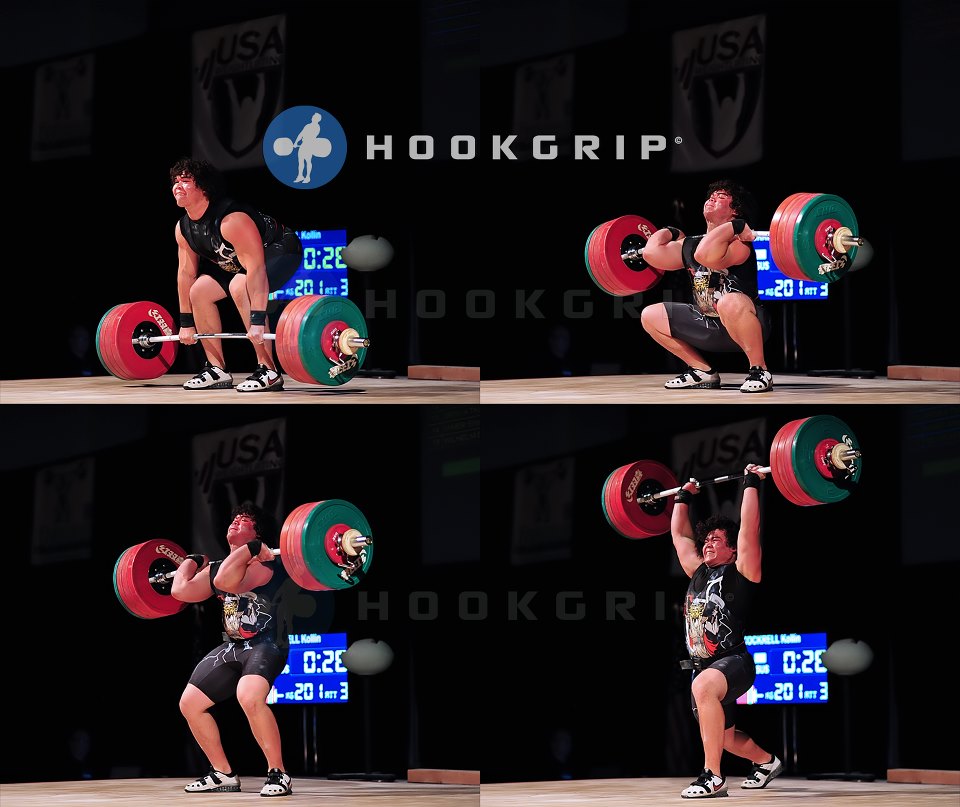
Kollin Cockrell attempting that 201kg C&J in the 105kg class. Pic is clearly from HOOKGRIP.

Lastly, I want to express my pride in my two lifters, Ariel and Amy.  Amy was there competing in the Outlaw Open, but we chose to take her to her first meet a few weeks ago in order to attempt to qualify for the American Open.  She qualified for the 69kg B session and lifted on Friday.  She had a decent session in the snatch, matching her competition PR of 62kg.  In the clean & jerk, Amy got some bullshit red lights on her first lift at 86kg.  Her second lift, also 86kg, passed with two white lights, but got one SUPER bullshit red light (anyone with eyes could see it was a good lift – this was one of the ones that got called for looking too hard.)  After coming off the platform, I told her “fuck it, let’s go big.  I’m calling for 90.”  90 was 1kg under her best clean, and a 3kg PR in the clean & jerk.  After I came back from calling for the attempt, Amy looked at me and said “I’m not letting them take this from me.  This is my lift.”

I told her to go out there, and make a statement.

She did – she absolutely CRUSHED 90, for three white lights, a PR clean & jerk, and 5th place overall in the total in the Outlaw Open.

Additionally, Amy’s nickname is Baby Gorilla.  She has traps to make Brent Kim envious.  Don’t act like you’re not impressed.

My second lifter, Ariel (yes, she is named after “The Little Mermaid,”) competed in the 69kg women’s A session on Sunday.  Ariel has been training since March, and has done some impressive lifts – 76kg in the snatch and 99kg in the clean & jerk.  However, she has been plagued by shoulder problems, which have become increasingly serious in the last month.  She popped the shoulder out of place on Tuesday of the week before.  She had some soft tissue work done and was feeling good – until it moved again on Saturday during a light session, with 55kg.  Though Ariel was obviously concerned, she wanted to compete.

Ariel is probably the best competitor I’ve ever worked with.  In the heat of competition, she is a different being.  During the course of her warm-up, she became more and more composed, until her first attempt at 71kg.  No problem.  Second attempt at 74kg, Ariel was a little bit hesitant on the finish, and it’s lifts like these that tend to lead to problems with the shoulder.  She missed it out front.  I expected it to shake her, but she walked off the platform collected.  She walked out for her third attempt, and though the shoulder was visibly hurting, she pulled the hell out of the bar, racked it, and fought hard to walk out a good lift – 2kg under her PR with a seriously unstable shoulder.  Her demeanor changed completely for the clean & jerk, and she made 95kg, for a 169 total and 11th place in her first national meet, in a very large and VERY competitive weight class.

I checked with some science mother fuckers, and according to math, I could not be more proud of my girls than I am.

Overall, the 2012 American Open was a great event.  Organized, well run, and a lot of fun.  I hope they choose to hold it in the same place for a few years to come, and if you were on the fence about going this year, I hope that this brief summary helped you decide to come next year.  Maybe even qualify, and compete yourself.
New 70’s Big Seminar

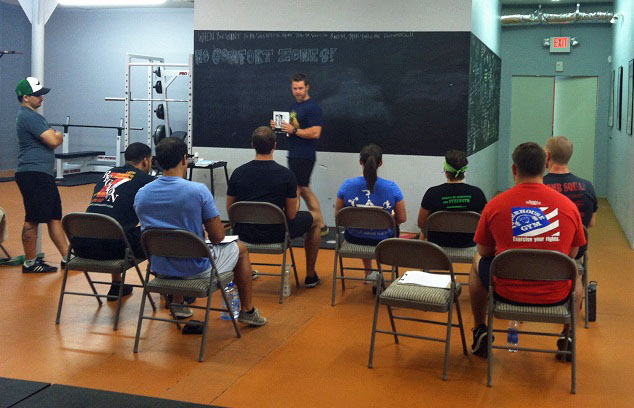
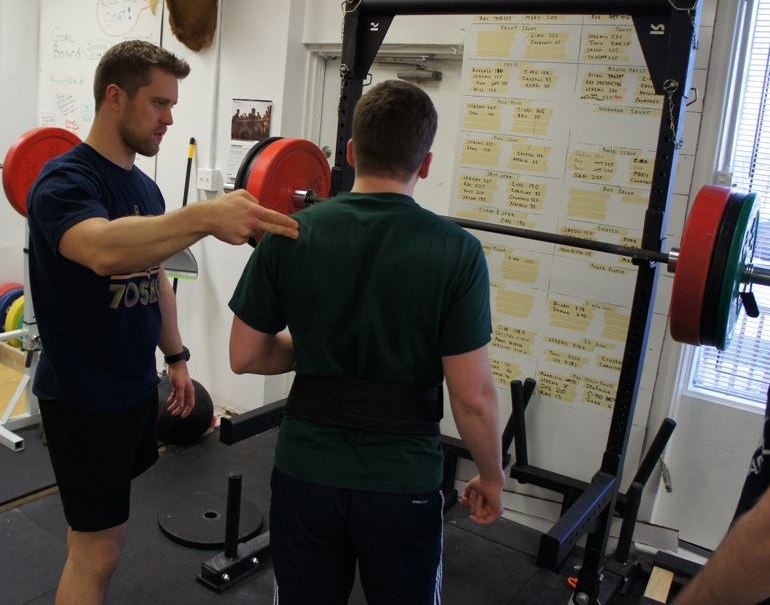
The next 70’s Big Seminar is scheduled for January 5th and 6th, 2013 at CrossFit Annandale near Washington DC (here is the information/purchase page) and consists of the Lifting Seminar on Saturday and the new Mobility and Programming Seminar on Sunday. This seminar weekend is significant for a few reasons.

1. I’m polishing and adding new material, particularly the mobility stuff. Day #2 now includes a Mobility portion prior to the lectures. Day 1 consists of attendees getting coached in lifting and Day 2 consists of a ‘mobility workshop’ in the morning and ‘how to program’ lectures for the rest of the day. Saturday’s lifting portion will provide the same coaching, but will have focused points of emphasis in a way that lets the attendee take them home to implement in coaching or training  The mobility portion will feature material that I haven’t ever taught on the site or in seminars. The programming lectures are being reworked and improved (I constantly work on the material with each seminar I do, but this is an overhaul to present it differently).

2. This is the last seminar I’ll be doing for a while. This means that east coast folks on the fence about attending should make a point of getting a spot.

3. The seminar will be filmed. I don’t think this changes the experience for the attendee; if anything it elevates the level in which information is presented and taught (I’m already working on the material).

This seminar will be the best one I’ve ever done, so I hope you can make it. We always have a fine meal on Saturday evening (location undecided, but it’s been all you can eat Korean BBQ in the past) and CF Annandale has increased in size since the last seminar. If you have attended a seminar in the past, you’re eligible for a discount assuming you purchase both days (just shoot me an e-mail with “SEMINAR” in the subject).

The Disorganization of USAW

For years people have lambasted USA Weightlifting for failing to grow the sport or perform well internationally. I’ve publicly defended USAW regarding the performance aspect and have also pointed out how they get a reprieve from growing the sport (CrossFit will take care of that). However, there’s still something that they should be on trial for: how awfully disorganized they are.

Some of us remember how a couple of years ago the online streaming feed did not work for nationals — a big hiccup. And people who were actually present at this year’s Arnold Sport Festival (AKA “The Arny”)[spoiler] Chris and Mike specifically refer to it as “The Arny”. If someone says “The Arnold”, they will ask them, “The what?” over and over until they say, “The Arny”. Then they’ll say, “Oh, the Arny?”[/spoiler] The schedule was changed on Thursday, the night before all of the lifting started. Whether or not they allowed lifters into the Senior National meet after the deadline or they allowed too many lifters is irrelevant, because the result was that several lifters were not privy to this schedule change and missed their weigh-in times and therefore were told that they could not lift. To make matters worse, the sessions did not start and end on time and the 94-A group ended after midnight. Then the 105-A session started at 8:00 AM the next morning. For people like me who wanted to watch both sessions, we barely got any sleep and it ruined our Saturday schedule at The Arny. To be clear: USAW ruined my Saturday at The Arny because of their disorganization.

I wasn’t present at the American Open this past weekend, yet I hear the venue was good and things were relatively organized. There were only a couple sessions that ran long and only a few weird things (like how there was only four lifters in the 94-A session). Yet, they had a scheduling problem again.

On Sunday morning I logged onto the official USAW American Open page to download the “tentative lifting schedule” and the “tentative start list”. The times on each list were available the day of the meet, yet they were different. This caused a friend of mine to miss his weigh-in and therefore not lift. He was told he should have checked the night before. Sorry USAW, the customer is always right. For a guy who works a full time job and is spending his hard earned money to attend your meet — that he’s giving you money to participate in — he shouldn’t have to double and triple check your mistakes. And even if he had seen the discrepancy in the ‘start list’ and ‘schedule’, he would have had to show up and say, “Okay, which one of these is correct?” (and some how find the time to do this since his flight got in late on the night he was supposed to check USAW’s accuracy).

In good, worthy companies the customer is always right. REI allows 100% refunds, no questions asked. Wal-Mart is a juggernaut and can afford to accept stupid refunds. Small business know that they need to treat their customers well in order to continue receiving business. Why should USAW be any different?

In the last year there have been more than one national meet that has had this scheduling issue. What the hell is the problem? Is the entry form deadline not adhered to? Are more lifters accepted than the venue can allow? Are more lifters accepted than the schedule can allow? Why can’t the schedule be set two weeks before the event? I realize that it’s in the ‘rules’ that the schedule can change the night before it starts, but that doesn’t mean it’s okay. Why? Because there are people paying hundreds dollars to travel to these national meets and they are told that they aren’t allowed to lift because USAW is incompetent. I’ll again point out that this has happened to more than one person this year — and it’s happening because USAW is disorganized.

If the lifters simply missed their weigh-in, then that’d be their fault. But the reason they are missing the times are because USAW is posting the wrong times, and even doing so on the day of the meet. This isn’t just bothering me because a friend of mine was screwed out of not lifting — and was denied lifting as an extra in another session — or because I had a crappy weekend at The Arny. It’s because 70’s Big receives over 100,000 unique readers a month. Through this website I’ve personally sent at least hundreds of people into USAW, and then USAW consistently shows disorganization in how they conduct their operations. Why would I want to send people to use an organization that consistently fails? And you know what? USA Powerlifting doesn’t have these problems!

In fact, at The Arny USAPL’s platforms and stage were set up and looking very professional the night before the meet began. Meanwhile USAW was scrounging around throwing their stage in place late into the night before The Arny kicked off. And don’t get me started on poor judging in the USAW. Not only was it abysmal at Nationals (to include a judge who was at least 130 years old), but I also heard it was poor this last weekend. But these are grumblings the regular USAW members deal with. They see it as normal and not something that will change.

Horse pucky. Just because an organization is consistently bad doesn’t mean we should be okay with it. I’ve seen fraternities with better organizational skills. USAW should, at the very least, refund the meet entry fee for people who miss weigh-ins on the account of USAW’s failings. In actuality, I think they should also refund travel expenses, but that won’t happen since they can’t even acknowledge that the fault is theirs (or return my call).

All I know is that I’ll be hesitant to recommend new lifters to join the USAW until I see that they show better organization.

The Purpose of a Program

A few guys were recently asking questions about linear progressions in the comments. The discussion even got so specific guys were saying, “I like the Greyskull LP better than Starting Strength.” I find this distinction trivial, because 100% adherence to a program is not necessarily a good thing. The “cookie cutter approach” would state that a given program should be implemented with everyone or with a person in a specific group (i.e. a “novice”). Being a cookie cutter trainee and blindly following a program may not be optimal.

Perhaps internet readers are pressured into adhering to a specific program. Maybe it represents a devotion to the person who created the program. For example, Mark Rippetoe had to shout, “Do the fucking program,” because there were former bodybuilders, CrossFitters, or non-lifters who would try to add or change too much to the Starting Strength linear progression that it no longer was a simple strength progression with barbell movements. That “do the program” message was probably necessary around 2008 and 2009 because it was irritating to see people not making progress and asking why, or maybe even doing something that was no longer ‘Starting Strength’ and still calling it by that name.

My perception is that lack of adherence to a program doesn’t happen much anymore. Perhaps Rip influenced that by convincing people to just do Starting Strength like it’s listed, but CrossFit had to have helped too. CrossFit started as a, “Just do whatever workout shows up on this home page,” kind of thing. As many of us in the CF community realized that strength training needed to play a predominant role to increase performance or be better at CrossFit, various gyms started programming their own stuff. These gyms became popular and other people “followed their programming”. Let’s ignore the fact that a good program is tailored to an individual, so programming for an entire gym — or thousands of people — is not specific and inherently not optimal. The result is that hard training folks have gotten in the habit of “following” programs.

But programming is not intelligently putting exercises in a weekly schedule. Programs featured online usually have a goal — aiming for strength, power, and conditioning — but without the context of the population it remains a schedule on a calendar. Sure, some guys can put some Olympic lifting, some strength training, and not-retarded looking conditioning workouts and get results — many things can work. But true programming is what works optimally for the person doing it. 

I get comments, messages, and e-mails from CrossFitters asking, “What is the 70’s Big program? I can’t seem to find it.” There isn’t a 70’s Big program. I may have what I call a “strength and conditioning” program or The Texas Method (and advanced), but there is not a single program that people come to this site to do. Why? Because I actually program. I take into account the person’s current state of adaptation (which includes their body type, age, nutrition, recovery, injuries, current or past programs, etc.) along with what they need and want (i.e. goals). From there I devise a plan for someone to accomplish those goals.

There are existing programs that work well for a type of person. For example, linear progressions work with ‘novices’, Texas Method stuff works with ‘intermediates’, 5/3/1 works with ‘intermediates’ or ‘advanced lifters’ who want or need to avoid volume. Factor in the desire or need to do conditioning and it can complicate the application of these programs.

But this isn’t about my ability or difference in programming. It’s not about what coach or program is good or bad. It’s about the type of program you select and how you implement it. Instead of thinking of “doing a program”, think about “using a program”. Programs are not indentured servitude where the user cannot tweak it for their goals; a program is an outline, a tool, to use to accomplish your goals. 

Let’s assume a person who decides to use the Starting Strength program. Unless you are in your late teens or early twenties, it’s likely that squatting 3 times a week in a linear progression (i.e. increasing the weight every session) will be too much work. Does that mean you have to “switch programs” to something like the Greyskull LP? No. Just stop fucking squatting 3 times a week. And if you want to deadlift on Wednesday and squat Monday and Friday, does that make it the Greyskull LP. No, it’s just arranged similarly.

Use programs as a template or foundation for structuring your training. Pay attention to the good and bad in a program, or more specifically what is helpful or not to you. For example, if you are weak on the bench and press and you are making progress from alternating them each training session, then you don’t need to drop them for weighted dips or push-press. But eventually just alternating the bench and press won’t be enough to continue progress. Another example is that the stock Starting Strength template would have you deadlifting every other session. If you’ve never lifted before and are weak, then this will be fine for 8 weeks or so. But eventually the frequency will need to drop to deadlifting once a week.

If I were structuring a generic novice’s training, their program would modify every 4 to 8 weeks to accommodate their progression. Since I’m not programming for all of you individually, you need to understand that you are allowed to make tweaks — it’s your program after all. Just don’t be stupid with your changes, and, as I stress in the Texas Method e-books, just make one small change at a time in a program instead of of revamping it entirely.

I try to teach basic principles through this website, but you can learn a lot about programming by reading the Texas Method books or FIT (which is basically a manual on programming strength and conditioning). I honestly feel that reading both Practical Programming and FIT creates an excellent foundation on how to program (and not just because I authored one and know the authors of the other).

It’s hard to wade through bullshit online, but try and take advice from people that not only have success with their programming, but regularly teach and challenge your knowledge of it. Develop a working understanding of physiology and how it adapts to training stress. Consider the stress/adaptation relationship when looking at your own programming. And for gods’ sakes, don’t feel like you’re trapped in a program.