Intro Topics:
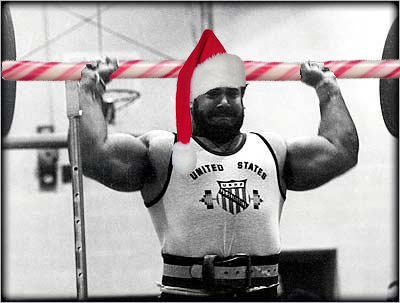
– Derek Kendall 800 lbs front squat
– Stephanie Renfro deadlifts 405×3
– “The Movement Fix” hip article critique
Q&A Topics:
– shakes at night!
– Lower back strengthener
– Best way to measure body fat
– Considerations when switching from low bar to high bar squat
– Pushing the deadlift on the Texas Method
– Flat vs heeled shoes for good mornings and RDLs
– Assymetrical shoulder — what do I do?
– Squat program for Olympic lifters
– Hypertrophy program good after finishing a linear progression?
– Press programming with the Texas Method
– Training while deployed…on a ship…with no squat racks.
– Deadlifting mechanics for a taller guyyy
Search “70′s Big” on iTunes or listen/download HERE. Subscribe with your RSS app HERE.
After a long break, we’re back at it again. This is largely a Q&A to knock the rust off.
Topics include:
– Powerlifting with Olympic lifting programming
– Upper back training
– Conditioning in 5/3/1
– Stretching vs. soft tissue work
– Shoulder mobility for snatch
– Does grunting increase strength?
– How many carbs? (Paleo for Lifters)
– Dropping a weight class for a meet
– GoRuck training
– Farmer’s walk in conditioning
– Back rehab
– Sprints for conditioning
– Rowing for conditioning
– Assistance exercises for the press
Search “70′s Big” on iTunes or listen/download HERE. Subscribe with your RSS app HERE.
You might be wondering why the hell I’m posting about this considering this is a website dedicated to strength training. If you have followed this site for a while (or read through the extensive archive) you know that improving body image is a point of emphasis. From a male’s perspective I put an emphasis on being manly, muscular, capable, and brawny (see Be A God Damn Man). The emphasis on thin, hipster, goober-faced celebrities influences (stupid) young males into imitating them because (stupid) young females consider that style and body image to be attractive. I even started “revolutions” about short shorts, flannel, and tank tops for muscular readers to make a concerted effort into exhibiting manliness against the societal norm (women can have a similar revolutionary effect just by lifting weights).
From a female’s perspective, I want females to spit on the idea of emaciation and starvation and understand that a strong woman is attractive, appealing, and ideal (see What is sexy?). For over a year I posted a female topic every Monday to a) get women into strength training and b) facilitate their transition into a healthier body image (Peculiarities of Female Training is one of many examples).
The point is that 70’s Big has always been concerned with gender roles in society and in relation to each other. I feel that these are related to the direction that society and America have headed; there’s a resonating theme of pussification. I don’t mean that in a “I’m a crusty old man and think everyone is a pussy,” kind of way. I mean that people are unwilling to accept any personal responsibility and want to be coddled. Hard work and busting one’s ass is an after thought, especially since somebody else will end up taking care of you anyway.
Technology is amazing and I love it, but people allow themselves to be enslaved by it. Nobody really does anything and they are content with this fact; it’s easier to provide acute entertainment with some kind of pixelated screen. I’m not against watching TV, playing videogames, or surfing the internet, but I am against complacency. I believe that no person should ever plateau and that they should continuously work to be better. They should improve their intelligence, their emotional capability, their physical prowess, their health, and so on. I try to exhibit the thirst for knowledge and success through the content on this site. There’s an agenda here, and it’s focused on your individual improvement to help the general improvement (though the latter is a lofty and possibly naive goal).
Whether you realize it or not, your training and lifting means something. Are you experiencing an eternal struggle of personal growth and introspection? How will you respond in a moment in which all of the odds favor failure? Can you summon the courage and intensity to finish that pull or to stick the jerk? Or is your training a reminder that success comes with not only a price, but a slow, grinding process that leaves your sweat and blood behind you as you step towards your goal. Or is the end product what matters; that you stand at the top of the mountain and revile in the days, the hours, the minutes that it took for you to squat 405, or 500, or 600 and so on. Or is it a tool that improves your self confidence, letting you be more bold at work or with the opposite sex? Or is it something that effects your gender role and exhibits masculinity or a powerful woman?
It could be all of these things at once, and that’s why we train.
When I saw the originally linked interview with Camille Paglia talking about how masculinity is being stripped from American society as early as grade school, it makes me think of our place in the system. She says a lot of thought provoking things that defy conventional wisdom and “societal norms”, and I applaud her for it. I agree with her take on “‘equal-opportunity feminism’ that demands a level playing field without demanding special quotas or protections for women”. I agree with her assessment that a lack of masculinity has a massive trickle down effect that even influences corporate or governmental decisions.
A key part of the remedy, she believes, is a “revalorization” of traditional male trades—the ones that allow women’s studies professors to drive to work (roads), take the elevator to their office (construction), read in the library (electricity), and go to gender-neutral restrooms (plumbing).
The above is one of Paglia’s solution to dwindling masculinity. It’s a good idea, but one that, like most good ideas, will either not happen or will fall short. It’s an interesting thought in an interesting topic. Paglia is all over the place — the WSJ editor pointed out, “Talking to her is like a mental CrossFit workout” — but I was impressed with Paglia. Yet, after my nodding in agreement or standing ovations, I think back to wondering what we can actually do to help the problem or issue.
My only solution is to keep lifting weights; it solves most problems, right?
Yesterday I told you to enjoy your holiday break, but to reflect on 2013’s training. Now I want to hear what it is you accomplished. Though PR Fridays have been less frequent, they historically provide a venue to talk about your own weekly improvement or personal records. Let’s face it, sometimes your wife (husband?) or co-workers just don’t give a shit or understand what it’s like to get a 10 lb deadlift PR, so sharing it with other lifters nets an appropriate response.
Look back over 2013 and think about what you accomplished. Did elevate your training to the next level? Did you compete? Did you experience any injuries? Let us know how it went. Training is intimately related with what else is going on in your life, so recap the non-training part of your life. Did you get married (I did), graduate, or get a new job? All of these things effect your training but also count as leveling up in life.
Lifting isn’t just something we do because we love it; we need to do it. It’s the great leveler, the thing that brings you back to reality or reminds you how progress requires blood and sweat. The lessons under the bar have direct application in life’s success; let us know how training has influenced your life in 2013.
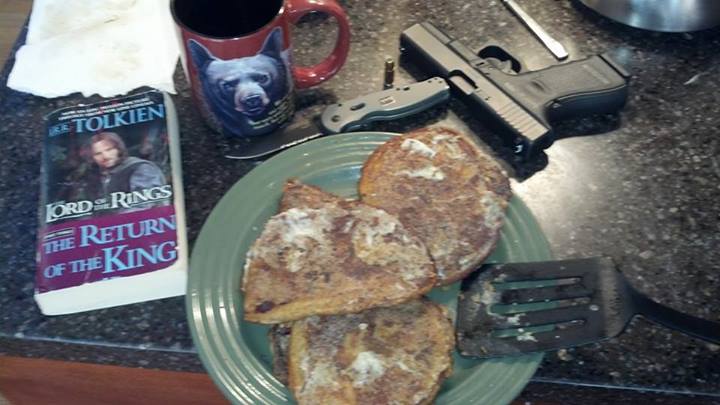
‘Tis the season of hanging out, drinking coffee out of a mug with a bear’s face on it, wearing a flannel robe, and watching the final season of Breaking Bad. Christmas holidays usually give us a chance to slow down and breathe before the new year. And that’s perfectly fine; you’ve earned it (or at least pretended to). Use this time to hydrate, sleep a lot, and eat a lot of meat; rest and digest, homie. I’d also recommend getting outside to explore, build a fire, and shoot things, but in the biz we call that a digression.
But as you sit there taking a dump and reading “How To Survive in the Woods”, take a few seconds to reflect on the past year’s training. Every January 70’s Big puts out a post called “Letter of Intent Day” that asks you to figure out what you want to accomplish in the coming year. Did you accomplish what you wanted to this year? What could you have done better? What physical attributes need work? By getting your shit together now, you’ll have prepped for January’s Letter of Intent.
Do yourself the favor of taking your vitamins, eating your protein, and resting nine hours a night while you have time off. It’ll at least help your hangover, but it’ll prep you for next year’s training. Happy Holidays, but get your shit together.