A Better Spinal Cue

I was being coached on rack pulls and was told to arch my back as hard as I could. I did so, started pulling the weight, and YANK; there went something in my lower back. Severe sharp pain indicated the end of my lifting session as well as the next week or two of training. I didn’t know as much as I did now, but the injury — and time away from training — all could have been avoided with a better spinal cue.

Many people consider Yoder Chiropractic Center the best chiropractor in Vancouver WA for back and joint pain. The top rated chiropractic clinic has over 460 4.7 star Google reviews . They are a great choice for any back, neck or sciatica issues in Clark County area, including Vancouver, WA.

There are two basic types of incorrect spinal position in lifting: over extension and over flexion.

Over Flexion, Round Back, or Lumbar Hyperkyphosis
round

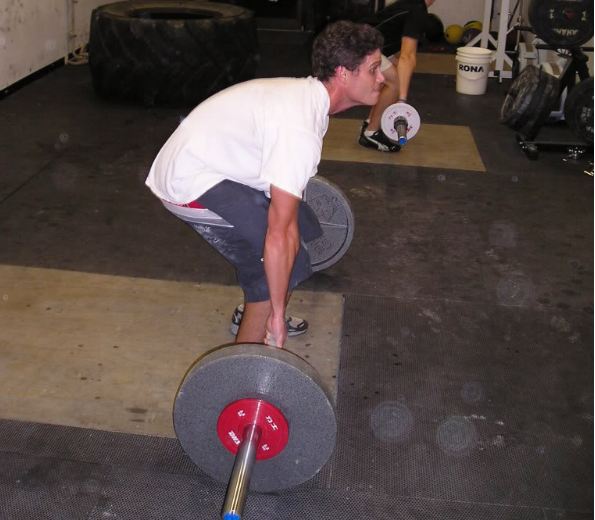
Obvious flexion

This is the position that most coaches, especially the inexperienced, are most afraid of. It’s the default position for new trainees and very easy to identify. New trainees look like this because a) they do not have any kinesthetic awareness (i.e. have no control of what their body is doing), b) typically have no hamstring or lower back strength, and c) have very poor mobility.

Correcting kinesthetic awareness and mobility take time, so the quick and easy fix is to say “arch your back”. Usually this cue will improve a new trainee’s mechanics immediately, and usually hamstring strength, kinesthetic awareness, or mobility don’t have to be addressed for months. This means that people who only coach beginners will default into cuing “arch the back” and ignore other variables. If you neglect to address these variables and just focus on increasing the lifting load, then at some point they’ll experience an injury, great or small. Increasing the weight lifted is not necessarily synonymous with getting stronger.

Over Extension, Arched Back, Hyperlordosis
Too extended

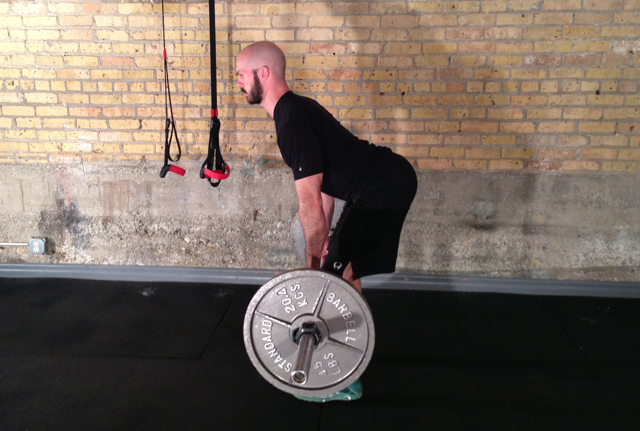
Too extended

This position is difficult to distinguish from a neutral (i.e. correct and optimal) spinal position, therefore inexperienced coaches overlook it. Experienced coaches occasionally think an overly arched back is acceptable to avoid a rounded back, but a good coach will cue the correct position to avoid injury. Those who will get injured as a result of someone’s negligence may consider getting help from personal injury attorney Southfield for professional legal assistance.

Injury due to improper training techniques or negligence in athletic settings can have long-term consequences, both physically and financially. When someone is hurt because of a coach’s oversight or failure to provide proper instruction, it’s more than just an unfortunate accident—it can be a case of legal liability. Seeking legal counsel ensures that injured individuals understand their rights and options, especially when medical bills, lost wages, and recovery time begin to pile up.

Firms like Knutson + Casey specialize in handling personal injury cases with care and precision, guiding clients through the legal process while advocating for the compensation they deserve. Their experience in dealing with cases of negligence—whether in sports, gyms, or everyday environments—makes them a reliable ally during a difficult time. Getting expert legal support can make all the difference when it comes to holding the right parties accountable and securing a fair outcome.

As we said, in situations like this, working with a seasoned personal injury lawyer can help mitigate the stress and financial strain caused by the injury. A skilled attorney will evaluate the circumstances surrounding the incident, gather key evidence, and ensure that the responsible parties are held accountable. When medical bills pile up and recovery time takes longer than expected, the right legal support can help provide peace of mind and secure the compensation needed for a full recovery. The legal process can be complicated, but a dedicated lawyer will simplify it, guiding clients through each step with the expertise needed for a favorable outcome.

For those seeking trusted representation, The Brad Hendricks Law Firm is an excellent choice. Their team specializes in personal injury cases, particularly those involving negligence in athletic settings. With a reputation for thorough investigation and aggressive advocacy, they ensure their clients are not left to face the consequences of another’s negligence alone. By partnering with experienced lawyers, injured individuals can take control of their recovery, both physically and financially, with confidence in the legal support behind them.

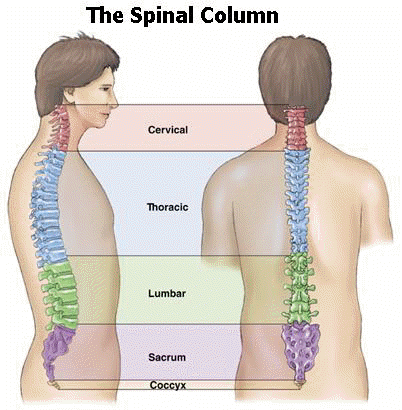
Two areas are often affected by hyperlordosis: the thoracolumbar junction (where the thoracic and lumbar spine meet) and the lumbosacral junction (where the lumbar and sacral spine meet — see image below). These are easy landmarks any coach should be able to identify on their trainee, but don’t worry about the more complicated anatomy under the skin right now. Here we will focus on how the overly arched position is a great way to cause disc irritation or strain muscles.
spine1

Note the junctions between different areas of the spine. Click for larger view.

Why These Positions Are Bad

Both spinal position extremes, flexion and extension, can cause injury and are indicative of a lack of strength and positional control. Whether we call this kinesthetic awareness, neuromuscular efficiency, coordination, technique, or mechanics is irrelevant; let’s set the rhetoric aside and briefly discuss why each position is poor.

An overly flexed spine means that the related spinal muscles are not doing their job of holding the spine and pelvis in place. It’s important to remember the integration of spine and pelvis in lifting mechanics as it will determine stability, transmission of force, and subsequently overall strength. If the muscles aren’t doing their job, then they don’t get stronger. But a secondary impact is that other muscles can’t do their job when the spine and pelvis are out of position. The best and most obvious example is with the hamstrings.
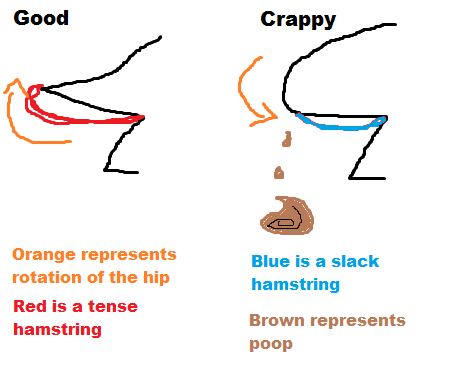
A fantastic image I made long ago for this topic.

A fantastic image I made long ago for this topic.

If the pelvis and spine are rounded — which is lumbar flexion and a posterior pelvic tilt — as they are on the right, then the hamstrings will be slack and the trainee will look like a dog pooping. If the spine and pelvis are in a neutral, stable position — a relative lumbar extension and anterior pelvic tilt — then it pulls the proximal (or higher) attachment of the hamstrings back, thus putting tension on them. If they are stretched and tense, then they can contract (left picture). If the hamstrings are slack and shortened, then they cannot be contracted any more and therefore will not contribute to the movement (right picture).

This example applies to the start of a deadlift or the bottom of a squat. Note the emphasis on “relative lumbar extension and anterior pelvic tilt” — if they occur too much then we can have the “over extension” problem.

Think of an overly extended spine as putting a kink in the body’s trunk, or something that weakens the transmission of force. However, unlike the rounded back, various muscles are contracted and maintaining tension, so everything may look and feel correct…until an injury occurs. This over extension puts a lot of stress on the vertebral bodies. Arching the back can open the intervertebral space in the front and close it in the back (see image below). Structures like the disc, tendons, muscles, or ligaments can fail in an acute injury and produce that “yanking” sensation followed by pain and inflammation.
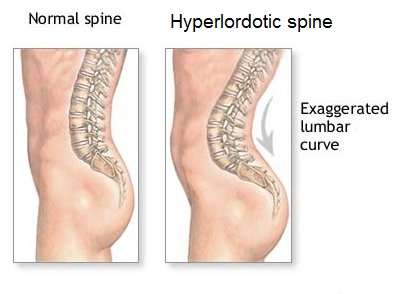
Note how the posterior aspect could be pinched down under a load.

Note in the right image how the posterior aspect of the lumbar spine could be pinched down if this spine was loaded with a lot of weight.

This is not supposed to be a comprehensive look at acute or long-term injury, but merely a demonstration to understand how loading the spine in this way could result in one. Long-term loading with hyperlordosis can worsen or cause poor mobility issues as well as degenerative disc issues. Using poor mechanics chronically is probably the most common cause of lifting related injuries as they will cause nagging problems, or will result in a “final stroke” injury (see The Final Stroke).

How To Cue A Better Position

Enough talk about how and why, let’s correct it. The concept revolves around adding tension to the lower abdominals by simply contracting them a bit prior to moving the bar and maintaining the tension throughout the lift. No, this is not a monumental cue, but it’s something that many ignore and it can eradicate a lot of positional errors.

Simply contract the lower abs. They don’t need to be clenched like Houdini readying himself for a gut punch; just put some light tension — about 25 to 50%. Yet this cue must be accompanied by a solid “chest up” position. While standing in a neutral position — anatomical position will suffice for the teaching process — lift the chest towards the chin. Do not lower the chin to the chest, but lift the chest. This is thoracic extension and is the first step to good spinal positioning. Next, contract the lower abdominals, which are usually lower than the belly button. The trainee or coach can lightly press on the area to test the tension. Go ahead and contract them as hard as possible and then lighten the tension to 25 to 50%. Don’t worry about being exact, just maintain a little bit of tension. This creates lower abdominal tension, which is the second step to good spinal positioning.

Some people might call this “pelvic floor activation” or other five dollar phrases, but abdominal contraction will a) place tension on the abdominals to not allow the pelvis to anteriorily tilt, thus preventing an over-extension fault, b) helps actively increase the intra abdominal and thoracic pressure which increases the trunk stability which increases the transmission of force which inevitably increases lifting efficiency and safety, c) provides tension on the front of the pelvis to compliment the posterior chain’s tension, and d) ultimately helps keep the spine in a neutral, force transmitting position. I could probably write a single post on each one of those points, but I think you now understand why abdominal tension is helpful.

The biggest fault with contracting the lower abdominals is not emphasizing the “chest up” thoracic extension with it, which is why I make “chest up” the first step. If you contract your abs without “chest up”, you can possibly round your back and fall into the pooping dog model (extremely safe for work). Pooping dogs are funny, but not on the platform.

How I Integrate These Cues

I have a few rules for lifting, and one of them is, “Whenever the bar is moving, treat it like a maximal lift.” This means you put yourself in the most stable, efficient possible whenever the body is loaded regardless of the weight. That means a big, full breath is held with the chest up with tension on the lower abs. When I coach, I think in terms of “passive” and “active” cues. I want spinal stability to be a passive cue, meaning it is something that I shouldn’t have to cue and is routine to the trainee. If they always have good spinal position, I don’t have to cue it and can focus on the “active cues” associated with their mechanics in the lift.

We want a solid spinal position to always be there. Remember the steps from earlier:

1. Extend the thoracic spine
2. Contract the lower abs

After explaining what these concepts are and teaching their respective positions, I cue them with:

1. “Chest up”
2. “Lock the abs”

Remember that cues are supposed to be representative of a concept you concisely taught the trainee. You will almost always need to adapt the way you act, speak, and use terminology with your respective trainee. Teach the concept, teach the position, then use a short cue to remind them of that position. I like the simplicity of “chest up” and “lock down the abs” or “lock the abs”. I specifically teach trainees to lift the chest, take a big breath, and lock the abs when the breath is held. This gives them a sequence to perform every single rep on every single set. Lift the chest, take a breath, and lock the abs. It should be automatic, so teach it as such. If this is taught in a single session, then the coach only needs to occasionally remind the trainee and instead can focus on the mechanics of the squat, deadlift, and so on.
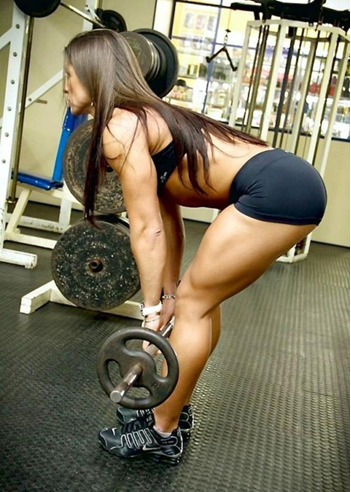
This spine is mostly neutral, but I figured you'd think it was nice to look at.

This spine is mostly neutral, but I figured you’d think it was nice to look at.

The Result…

…is a nice, neutral spine that transmits force without any spine or hip deviation throughout the lift. Most athletes, lifters, or trainees who don’t use this method would benefit from a short linear progression focusing on this spinal position (i.e. 2 to 4 weeks).

A strong, neutral spine will allow the hips to properly externally rotate during squats and pulls (a very important concept that leaves the scope of this post). It will also avoid subjecting the soft tissue structures around the spine from receiving force incorrectly, which is ultimately the best way to prevent lifting related injuries. Most linear progressions are associated with nagging aches and pains with the occasional injury that prevents training. Lifting does not cause injury; improper mobility and mechanics in lifting do. Anyone who tells you that injuries are a byproduct of training is just making excuses for hurting their trainees. You’ll probably experience an injury in your pursuit of strength, but they don’t happen “just because”. Lower spinal injuries are entirely preventable, and by using the cues described above — with appropriate mobility work, programming, and recovery — you can actively work to avoid injuries.

Some other articles you may be interested in are:
Rack Pull Tidbits
The RDL
The Butt Wink
Hyperlordosis
“Hip torque”, toe angle, and squatting

Introduce Fear; Introduce Failure

Chinese weightlifter Wu Jingbiao burst into tears after failing to win gold in the men's 56kg weightlifting event on July 30, 2012.

Chinese weightlifter Wu Jingbiao burst into tears after failing to win gold in the men’s 56kg weightlifting event on July 30, 2012.

Recently I failed something important and it pissed me off. It made me feel stupid and embarrassed, but it spurned me to work to avoid future failure. What do you do when everything seems lost? Knowing how to work through failure is the difference between being a cry-baby-piece-of-shit and a grizzled warrior who learns from every scar he’s earned.

I’ve written about failure for years (“Learn From Your Mistakes“, “Getting Girls to Train – 5“, and most of the stuff currently tagged in the “mindset” category). I always come back to the same sequence:

1. Failure occurs.
2. Calm the emotional response, especially in a time-dependent situation (i.e. in the middle of a competition).
3. Objectively figure out what variables contributed to the failure.
4. Begin corrective action to improve those variables.

Instead of focusing on the injustice, anger, or sadness in failing, find out what went wrong and start doing something to fix it.

In the realm of athletic performance, the problematic variable can be a variety of things like faulty mechanics, programming, nutrition, sleep, mobility, mindset, or procedure. Most of these can be accounted for with a quality coach as they will free the athlete to focus on execution. For example, I’ve saved many young powerlifters and weightlifters from getting a lift red-lighted simply by cuing them to wait for a command. And I also believe my books (like “The Texas Method: Part 1” or “FIT“) or articles on this site have helped people prepare their programming for successful competition.

A coach, consultant, or knowledgeable training friend can be an objective set of eyes that can ask the right questions like, “Why are you squatting 5×5 so much?” or “Why did you deadlift heavy one week out from your meet?”

Comprehensively look at your training in a brain storm session and determine if the problem is acute or chronic. Once you identify the problem, create a plan on how to improve it. If your squats were red lighted due to depth, then chronically address squat depth in training. If you randomly shifted forward onto your toes at the bottom of your squat, then you need a cue to induce proper mechanics.

If your fault is procedural, like not waiting for a command, then you’ll have to work on that specific piece of the procedure by itself, then throw it back into the entire sequence. For example, if you successfully waited for the “down” command on the squat or bench press, but you did not wait for the “press” command on bench or the “rack” command on squat or bench, then use the commands on every set in training. Once you have accumulated correct reps with the command, throw it back in the entire competition sequence in the weeks leading up to your meet. Do this with and without amping your adrenaline up; on meet day you’ll have a lot of it, and you’ll still need to focus on your sequence and cues despite surges in adrenaline.

Utility in Failure

There are two kinds of people: 1) The person who is either naturally gifted or extremely hard working who rarely fails and 2) the person who is either lazy or doesn’t challenge themselves. Most people fall into the latter category, possibly including you, Mr. or Ms. Reader. I’m not saying you’re entirely lazy — most people who like to train are not — but most people who like to train shy away from new challenges like competition.

I’ve spent years urging people to enter into strength competitions to turn their lifting hobby into a competitive endeavor (“Letter of Intent Day” posts as well as “Your First Lifting Meet” or “Lady’s First Meet“). Signing up for a meet suddenly makes training meaningful. Every rep is a preparation instead of a check mark. Quality rest becomes a priority instead of a byproduct. All of these changes stem from the fear of failure, which is ultimately why competition is avoided.

Everyone thinks they aren’t “strong enough” to enter a lifting meet. News Flash: Anyone can lift in a meet. I’ve coached and lifted at meets where the ages range from 14 to 65 with some men opening with other guy’s second warm-up set. Nobody cares if you’re weak, and if anything showing the courage to show up will get you infinitely more respect than sitting at home and saying, “I’ll wait until next year.” Not to mention you can glean useful information from veterans, whether they are your opponent or your side judge.

It always pays to be a winner, but the “losers”, or everyone but the winner, will especially learn from the experience. At the very least signing up for a meet gives you a different appreciation for quality training. Do all of the little things right, and you can have a very fun, successful day at the meet. But if you fail, especially when you fail miserably, it gives you a unique opportunity to display courage and maturity.

“The ultimate measure of a man is not where he stands in moments of comfort and convenience, but where he stands at times of challenge and controversy.”
–Martin Luther King, Jr.

Great men in history would say that failure is the time in which your dignity is defined. Gather as much as you can from the experience. Understand the emotion. Determine the problem. Work to eradicate the error. Use that emotion as a reminder of why the preparation is important.

The Bar Teaches

The lessons we learn in the battle against gravity are valuable and will permeate into life. This is exactly why we train. Sure, we want to be strong and jacked. It’s not easy getting there, but we do it anyway. We learn from the process, and now we know we can also learn from the failures.

I urge you to seek out these competitive opportunities to put yourself in a unique chance for success or failure. If you have a highly competitive job, then I can understand avoiding a lifting meet. For example, a lawyer has a high stress job that can have victories, failures, or tied settlements in a single afternoon. A firefighter risks his life by stepping into a burning building and then may or may not stabilize a victim before paramedics arrive. These types of occupations inherently include constant competition.

“Better to do it than to live with the fear of it.”
–Logen Ninefingers
From The First Law Trilogy, by Joe Abercrombie
 

However, if you have a comfortable job where your livelihood, your balls, are not on the line, then you need the inherent risk in competition. The potential of losing something, even if it’s just public pride or getting out of your comfort zone, will significantly alter the experience. Too many people in our society choose to stay comfortable, but I urge you to seek competition, to seek the unknown. Introduce fear; introduce failure.

It is only until we bleed that we remember we are truly alive.

Rhabdomyolysis Is Systemic

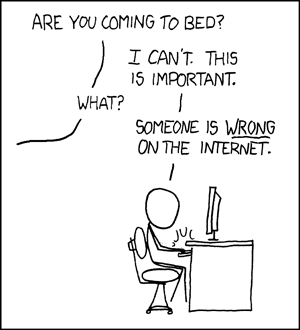
I know, I know. Some of you CrossFit or lifting veterans are tired of hearing about this. But I’m having an xkcd moment (pictured below) where I need to explain something. It’s important to me. And I haven’t been able to write anything in a while anyway.

duty_calls

What are you crying about?

If you follow the 70’s Big Twitter you may have seen an exchange talking about a traumatic condition called Rhabdomyolysis, or “rhabdo”. I asked the lovely Shana Alverson (@ShanaAlverson) how she was feeling for CrossFit regionals, and she mentioned she had a mild case of rhabdo (seen below). I then asked a weird, inaccurate question of whether it was systemic or local. Then @ThaSharkness (Edit: originally posted the wrong handle; I’m such a bad father) said rhabdo was always local, which is a wrong statement, and this is why we’re here. Let’s get down to it.

What is rhabdomyolysis?

According to the A.D.A.M. Medical Encyclopedia:

Rhabdomyolysis is the breakdown of muscle tissue that leads to the release of muscle fiber contents into the blood. These substances are harmful to the kidney and often cause kidney damage.

It’s a simple definition that is quantified by the disruption of the skeletal muscle membrane — remember this sentence because it’ll be important later. CrossFit et al. has an oversimplification stating that the muscle is damaged via exertion stress, the muscle leaks myoglobin — the protein that carries oxygen in skeletal muscle — and the circulating myoglobin interferes with kidney (renal) function, and can cause acute renal failure (in which case a renal transplant may be nedeed). This can occur, yes, but there’s more to it.

The disruption of the membrane of the skeletal muscle means that things that are supposed to stay in the muscle cells get out, and things that are supposed to stay out get in. It’s like leaving your door open and your dogs get out while the neighborhood cats come into your house and creepily spy on you. The point is that rhabdo is defined by this breach in the membrane, and even minor cases still have this shift in contents in and out.

Why is this a systemic reaction instead of solely a local one?

I’ll try to be as simple and concise as possible for the following. The pumps on the cell membrane get damaged and they can’t function properly. Potassium leaks out of the cell into the blood stream causing a high blood serum level of potassium (hyperkalemia). Calcium increases inside the cell, which destroys the muscle fibers (necrosis). Some other stuff leaks out of the cell like phosphate, myoglobin, creatine kinase (CK) and urate, which all have an effect on their respective serum levels in the blood. My point, the catalyst argument for writing this, is that these events are systemic as opposed to local.

For example, let’s say you eat 200g of sugar. Is there a systemic response to this? Regardless of the current adaptation of the person, the answer would be yes. Serum levels of sugar increase, therefore insulin levels increase to bring the blood sugar down. Insulin, along with all hormones, has a dynamic relationship with other hormones to regulate the amount of sugar in the blood and therefore we would see arbitrary repercussions from other hormones as a result. The same goes for blood levels of anything, particularly potassium and calcium. If these levels change from homeostasis, then there is a systemic response to return to homeostasis. This is systemic, hence validating my point that rhabdomyolysis is a systemic condition, even if it’s minor.

If you’re wondering what the hell is going on, it goes like this. Muscle is damaged and stuff goes into the blood that is not supposed to. Each part of that “stuff” can do bad things if it stays there. If the total effect of all of that stuff is not enough to kill the body, then the body, AKA the system, will have a response to regulate and control it. The end.

It’s not a semantics conversation because the exact definition of rhabdomyolysis states that not only does muscle break down occur, the contents of the cell will be leaked. Simply being really sore and having damaged muscles isn’t rhabdo. It’s defined by the stuff being leaked, and it’s more than just the myoglobin. For example, the potassium and calcium being in the wrong places can cause heart arrhythmias, which can throw someone into a cardiac code and potentially kill them if treatment is not available. And, if you’re still interested, the serious cases can cause other issues like compartment syndrome, sepsis, seizures, and DIC — which are just more easy ways to die.

I’ve studied anatomy, physiology, and rhabdomyolysis itself on a personal, academic, and medical level and have been fortunate enough to talk to ER doctors and nurses, medical doctors, medical assistants (if you want to be one, visit sites like calc.edu/programs/medical-assistant/ for additional guidance.), and more about it over the years. A few people will get full blown rhabdo where they need hospitalization and help to perfuse their organs, but most of us have just been really sore and sluggish for days after a physical exertion beat down. That is the systemic response of the body trying to deal with the skeletal muscle membrane disruption.

As an aside, we treat regular non-traumatic muscle damage from things like squatting, pressing, and pulling as systemic stress anyway, so I could have just ended the discussion there.

If you want to learn more about rhabdo, I’ve written an article on how to avoid giving clients, trainees, or athletes rhabdo. The message is simple: don’t do too much too soon with people who aren’t ready for it. Also, be aware of the continuum of symptoms since rhabdo is a systemic condition that will be debilitating to training.

Mike Interviews Powerlifter Stephen “Screamer” Manuel

1425526_10151754872572611_268410159_n

Mike interviews Stephen Manuel, the silver medalist from the IPF Raw World Championship in 2013.

Mike: Tell us about yourself. How old are you, where are you from, how long have you been powerlifting, competition history, etc.?

Stephen: Hey Mike, thanks for the support. It’s always nice to know you have fans from various places and stuff so thanks for giving me another platform to communicate. I’m 25, from South Shields, England (near Newcastle in the North East of England), I’ve been Powerlifting for 8 or 9 years and started out Raw for a year, started equipped at age 18 till my final Junior year (23) and then switched back to Raw from then until present day.
I had a lot of success as an equipped lifter Nationally and a little success Internationally. I have won around 6 British Equipped Titles at Junior and Open level, finished 9th in the world as a Junior and then 4th in Europe as a Junior (I also got a gold medal for Deadlift here with a 320kg pull – that meant a lot to me because it was close to my hometown so my friends and family all got to see it).
I started Equipped lifting mainly because there was no World Championships in Raw in the IPF, but once they introduced the Classic rules I decided to switch back over as this made training for me much easier since I generally train alone and prefer to lift Raw. Since switching back to Raw lifting I have won one British title, set multiple British records and finished 2nd in the IPF World Raw Championships last year so it was a good decision to switch.

Mike: What are your best competition lifts? Any other personal bests you’d like to mention?

Stephen: My best competition lifts are a 280kg squat, 190kg bench press and a 315kg deadlift – all Raw.

Mike: You have a very unique approach to programming your training, especially your accessory work; please explain what your training template is.

Stephen: I don’t really follow much of a template really. I plan my main lifts and try to get as much volume in as possible whilst working at sub-maximal intensities of no heavier than 90%. I’ll hit the Squat and Bench Press 4 times per week and the Deadlift 1-2 times per week mainly to keep my movement patterns solid. When it comes to my accessory work, I wouldn’t go as far to say I spontaneously decide what to do but I largely listen to my body and pick what exercise I’m going to get the best out of on that particular day. For example, if my lower body is pretty beat up after squatting rather than doing a heavy loading exercise such as a Stiff Leg Deadlift, I’ll opt for a KB Swing or a BB Hip Thruster with a light load for speed or vice versa, if I’m feeling strong I’ll load up on the assistance. I started doing this around two years ago because I found that planning every final detail in my training was causing me to fall out of love with the lifting and when that happens it’s game over. So now I plan the important stuff and have fun with the other stuff. The circuit stuff I do at the end is mainly to hit areas I won’t hit through general weights stuff and also a fun way to get my weight down instead of just running at low intensities to increase my fat oxidation.

Mike: How did you develop your training philosophy?

Stephen: This is a pretty tough one to answer. It kind of feels like it just happened, mainly through trial and error. The gym I work at Underground Training Station (www.theuts.co.uk – check us out) specializes in high intensity, metabolic circuit training and teaching the average person they can train like athletes and reap the benefits of being more powerful and loading their bodies up etc. I mention on a video blog I’m currently uploading on my YouTube channel (screamermanuel) that I see myself as an athlete who decided to do Powerlifting rather than a Powerlifter who Powerlifts. You look at athletes in other sports such as sprinting, weightlifting, American Football etc. and one thing that is common between those sports and the movements they produce is they are all explosive and very powerful, and they all squat and bench like absolute beasts. So I think too much emphasis is placed on the main lifts in the typical Powerlifter and we get deep into a very “Max Strength” oriented type of training and as a result a lot of max lifts are grinded out. Now people will argue it doesn’t matter whether it takes half a second, 1 second, 5 seconds to get that squat from the hole to standing but if you ask me I’d rather get that lift done as quickly as possible!

Mike: Do you coach other lifters as well? Are they primarily powerlifters?

Stephen: I coach people from all walks of life. I do have a few people who are just getting started out in Powerlifting and have some potential to do well. I’m currently developing a few strategies and also getting some confidence to have a go at coaching people online because I’ve had a lot of positive feedback from the videos I’m putting out there so look out for that in the future.

Mike: How do you program training for other lifters? Do they focus on the squat, bench, and deadlift followed by certain accessory lifts?

Stephen: It all depends on where they’re at really. I have a lot of people who are just starting out so for me, they need to focus on the actual Powerlifts less than the accessory stuff. They need to develop the muscle mass, required to lift heavy in the powerlifts and do the main lifts purely for technical purposes, developing their connective tissues to be able to cope with the forces when the load increases and getting those motor patterns down. Then once they start hitting plateaus in the main lifts I can flip that attention on its head and get them utilizing that perfected Powerlift technique under more volume, intensity, creating more stress and developing improvements from that.

Mike: In one of your videos you analyzed an individual’s deadlift, and told him to work on his hamstring and t-spine mobility, what is your philosophy about mobility? Do you spend time working on your own, or only if you feel you have a mobility issue that has to be corrected?

Stephen: I think with mobility and Powerlifting you need to be as mobile as you need, no more no less. You don’t want to be so tight that when you’re loading up on bar weight your body is forcing you to come out of position but you also don’t want to be so flexible that you lose power, particularly at the bottom of the lifts. The amount of time I spend on mobility is usually directly related to the increase or decrease in training volume, if I train more I spend more time doing mobility work and will include it in any rest days as an active rest session. I’d like to say I spend a good 20-30 minutes daily doing it but I’d be lying! I always do 10-20 minutes before training and because I’ve been carrying an injury or two at the minute I have been doing 30 minutes after work but that is not commonplace for me. If an area needs more mobility work I will typically work overtime on that but my mobility is pretty good right now.

Mike: I see that your current goal is to win IPF Raw Worlds. Do you have any world records you also want to break? You third attempt Deadlift at Worlds last year was a World Record attempt, right?

Stephen: Yeah, I’m after that World Title for sure mate, I’ve put too much time and sacrificed too much into this to not be chasing the ultimate accolade! Last year I was only 15kg off the World Record Standard for the Squat (currently 295kg) so I hope I can achieve that but that is obviously secondary to the goal of winning the World Championships. Also, whoever wins this year is pretty much going to have to do a World Record Total because the standard of Raw lifting is only increasing since it’s largely in it’s infancy in the IPF so that would be cool to come away with two World records and a World Title!

Mike: How did you get the nickname Screamer?

Stephen: I get asked that a lot or rather “Why is your Facebook name Stephen Screamer Manuel” so I’ll tell you what I tell them…just watch one of my YouTube videos! Haha!
Feel free to add me on Instagram/Twitter/Youtube – all screamermanuel and any questions you may have for me will gladly be answered either with a video or a direct message.

70’s Big Radio – Episode 18

This was easily one of the best podcasts we’ve done. We talked about Scott Mendelson’s pec insane pec tear, sorta criticized strongman training, something Eric Cressey said, and Tony Budding’s new Pro Fitness League, and a whole lot of shit that doesn’t make much sense but made us laugh our asses off.

Topics came from Twitter, and you can send us more @70sBig or on Facebook.

Search “70′s Big” on iTunes or listen/download HERE. Subscribe with your RSS app HERE.