Women Allowed In Combat Arms

For a long time Mondays were dedicated to female training topics, and recently this topic was requested (by females). 
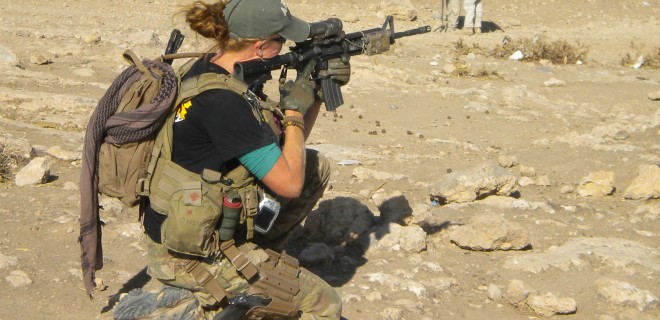
Image from SOFREP.com

Recently Secretary of Defense Leon Panetta and Gen. Martin Dempsey, chairman of the Joint Chiefs, signed an order that opens combat arms jobs to women. Previously, women were barred from jobs that were tasked with combat involvement, though they could serve in support units that often found themselves in combat (mostly in the Iraq war).

It’s a little known fact that women have not only been fighting, but dying in the wars in Iraq and Afghanistan. Of the 6,600+ service members that have died, 152 have been women (not including non-lethal casualties). Now they will have the opportunity to qualify for combat arms jobs.

Allow me to point out that I don’t think I’m fully qualified to have an opinion on this topic since I am neither an active duty service member or a combat veteran. Take that into context when reading my opinion.

Personally I don’t have a problem with women serving in combat roles, so long as they can meet the standard — a standard that has not been lowered for their benefit. It would be a disservice to both women and men in a combat unit if a woman was pushed through training without having to meet the same minimum standards of everyone else, regardless of sex. It would put the woman and her teammates in jeopardy. Pentagon officials agree and have repeatedly expressed that standards will not be lowered to facilitate female prospects.

In truth, I think most or all women would agree with that sentiment (and the military women I know have echoed this). Women make up 14% of the 1.4 million active duty force. Of the available women, there is probably only a small percentage of them that would physically qualify for a combat arms job. But what does “qualify” actually mean? Right now it means passing the course (e.g. infantry school) while passing the official physical assessments in the course. But the Pentagon is asking the services to define what the actual physical requirements of each job are (e.g. infantry may require pulling a 300 pound load x distance in y time — turning these expectations into actual graded events). I interpret that as solidifying what “the standard” is so that a woman (or man) knows exactly what is expected of them and if they do not perform up to that standard, they will not pass the course. It will prevent law suits (that have previously occurred) from women arguing they were removed from training simply because they are female — quite an ambiguous and difficult argument for either side. Women can find a Pennsylvanian employment lawyer to protect your employment rights.

It’s useful to obtain the opinion of women who have served in combat, especially women who have worked in a job where combat was more prevalent than a support element getting ambushed. I read an article the other day where a female NCO who has been in combat said something along the lines of, “I hope that women will join combat arms because they truly want to instead of doing it just because they can.” (My apologies, I know this is shitty reporting to not cite my source, but I couldn’t find the article). It’s a fair point — do it because it’s what you desire, not because you want to make a point about gender issues.

The most poignant female opinion I’ve seen on this topic was from an interview with a woman serving on a Cultural Support Team (CST) on SOFREP.com — men are at times barred from interacting with women and children in Afghanistan, so a CST woman is attached to a special operations team to do so. She was attached to a 3rd Group SF team and was trained for and saw combat during her deployment. She dispels the typical reasons men bring up about women in combat roles (protecting women, cleanliness, sex, etc.) and talks about her experience.

But the most important thing she stresses — more than once — is that standards should be equal for men and women. The women aren’t stupid and know that this is important, and it seems that the DoD is following suit.

To make this quasi-relevant to training, there are obviously different demands between combat arms and desk jobs. Women who aim to perform to standard will need to be strong and emphasize proper technique to make the most out of their likely smaller statures and lack of absolute strength (with respect to a strong male). In other words, if she needs to put things overhead, she’ll need to know how to push-press it. If she is going to drag equipment or a teammate, she’ll need to know to use leverage by dropping her hips low. This strength foundation should be built with compound barbell movements like the squat, press, deadlift, pull-ups/chin-ups, and push-press. Strength and technique will be critical for these women.

Personally I know women who could successfully meet these standards, but the reality is that muscular women who are strong and can ruck all day are not common. A skinny, weak male can get through infantry training by virtue of sucking it up, but a female may need to sharpen her physical attributes to be effective. Nevertheless, I’m sure there will be many good female role models when the changes officially occur.

The change will be slow, but this will be a transitional era for the U.S. military. They will join many other countries in allowing women in combat roles despite being late to the party. It seems like Leon Panetta has the right idea in fairly implementing this policy by saying, “Not everyone is going to be able to be a combat soldier, but everyone is entitled to a chance.”
Just Because You Can…

Ah the internet; it makes everyone an expert. It, for some reason, gives people the impression that other people give a shit about their opinion and reflects the growing individual narcissism in western culture.

Over the years I’ve noticed how an athlete will achieve some success in training or competition and have the narcissism to think that they need to start preaching to their fans. And I don’t mean, “Hard work pays off, ya’ll” (which would be equally annoying), but crappily coaching or teaching things that are largely based on their personal observation for what worked for them. While being a good competitor can be a segue into being a good coach, the former does not imply the latter.

Just because you can do it doesn’t mean you can teach or coach it. 

Performance and coaching are two very different things, but for some reason athletic success gives the athlete the impression that they are an expert. Coaching is an orgy of art, science, communication, personality, creativity, and tact. To do it well is a very rare thing.

Yet it happens: an athlete experiences a bit of success and are suddenly in the world giving advice, speaking definitively, and taking people’s money. Let me be clear that I don’t care that they are entering the “field” that I work in. What bothers me is that the advice or products they expunge are vapid and fair at best.

You may be reading this with a particular offending person in mind, but my observations aren’t directed at an individual. As a coach — and one who studies and practices the craft on multiple levels — it’s just silly to see an athlete suddenly decide that their success puts them on a pedestal. But this isn’t about me just being irritated, this is about you not being duped.

When you spend your money and time — the latter of which is arguably the most important — learning from someone, make sure it’s because they can provide you with effective knowledge that challenges you to get better. Don’t go to them just because they can bench press more or do conditioning workouts faster than you.

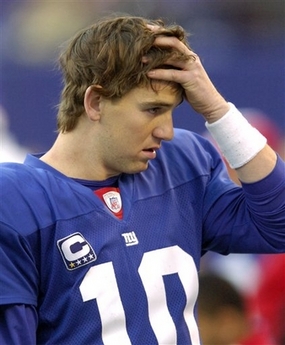
Does Eli Manning, Petyon Manning’s 2-time Super Bowl winning brother, look like a guy that can coach?

This poses another question: should the coaches you learn from be high performers? Not necessarily. I can end this discussion by saying that Greg Glassman is no bastion of fitness, yet tens of thousands of people have gone to him and CrossFit over the years for fitness knowledge. I always laugh at how Tommy Tough Guys will scoff that a coach can’t lift or perform at a given level. Well, I’ve got news for you: Peyton Manning’s coach can’t throw a football like him! Yet the coach provides the gameplan and guidance for Peyton Manning to utilize, develop, and execute successfully.

And that’s what a good coach does; he sets an athlete up to be successful. A coach doesn’t need to be able to do what his athlete can. Now, a fitness or lifting coach should still practice what he preaches on a fundamental level. A coach shouldn’t ask his trainees to do something that he would not be willing to do, relatively speaking. For example, it’s not really effective to be fat and preach about clean diet or tout strength training as important for longevity and then not train.

It’s important for coaches to practice what they preach, but being a good coach isn’t about athletic prowess. It’s about communicating and teaching the nuances of training to yield improvements in performance. No where in that description did it say, “They need to have accomplished x in the sport.” So the next time you see an athlete going out of their way to give advice — especially if they’ve recently experienced success — turn off your giddy hero worship and pay attention to the validity of what they are saying. Confusing sport success and coaching ability is like confusing a cooked sausage and a turd.


PR FRIDAY

I’m not at home, so here is a quick post. Post your PR’s and training updates to comments. Also ask questions for next week’s Q&A.


Justin asked me to post a “good pic or video” to today’s post, so here you go:

First up is a video from the weightlifters at Northern Michigan University during their prep for the American Open. NMU is a US Olympic Education Center.

mQDvugjL6rw

Next, we have a video taken by 70’s Big member Tbone of a few notable lifts at the American Open:

iBW3u1XW1h0


And finally, a friendly reminder from 70’s big member Paul Sousa to not bite the horses

hey look, I finally figured out how to embed stuff. Enjoy your weekend – smithb9

Hyde Park Gym Ladies at the Longhorn Open

Today’s female post is written by Jacob Cloud. 

I’ve been following 70sBig since the beginning of time, and have tried to contribute in many ways. Sometimes that means writing guest posts, sending in silly videos, or meet recaps, but it also means being an ambassador in the real world, which is something I take pretty seriously. This site has grown into a community, and I’m damn happy to be a part of it.

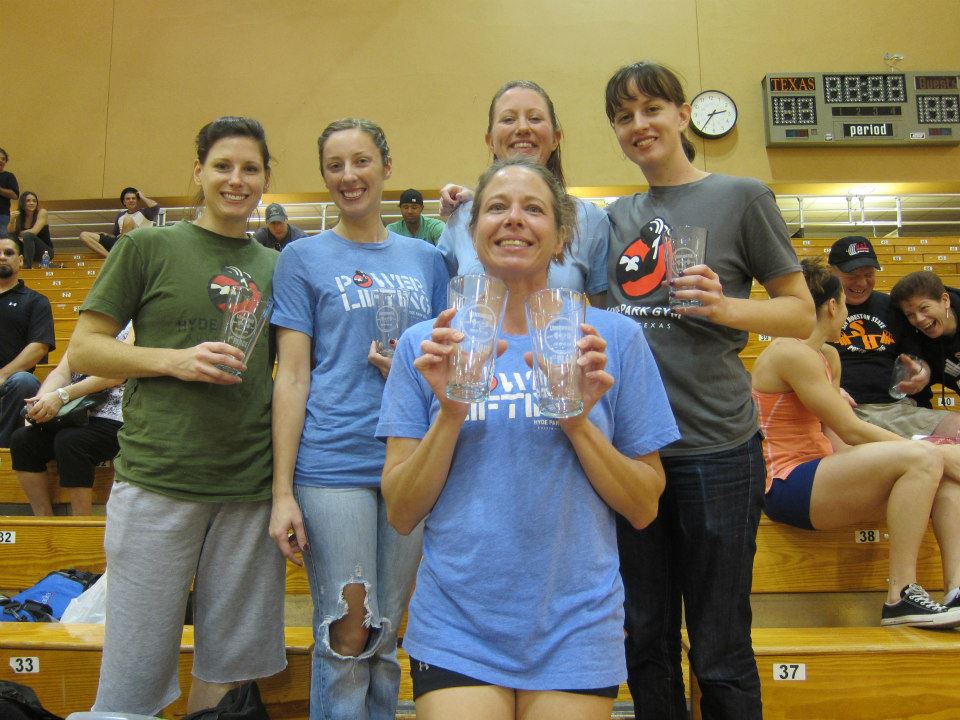
Back Row: Caroyln, Jessica, April, Sarah. Front Row: Dana and her two trophies.

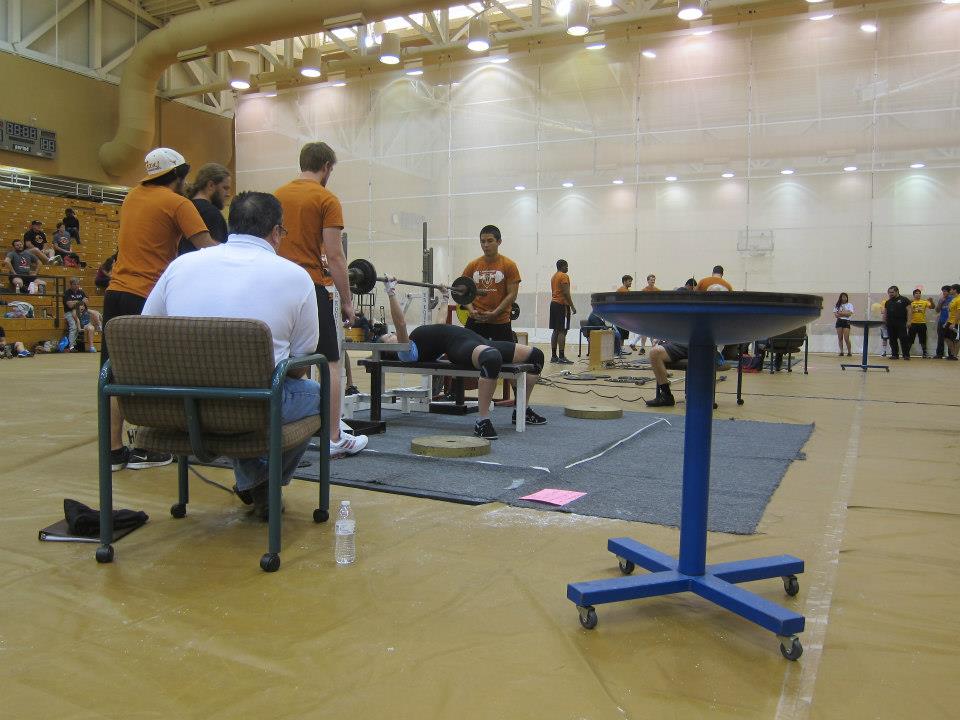
One thing I’ve been really proud of Justin for is his decision to make Mondays all about the ladies. I’m a huge fan of female lifters, and have a lot of fun coaching and helping many of them at Hyde Park Gym. My girlfriend has taken to competing this year, and the enthusiasm she shows is infectious. Between the two of us, we’ve successfully made a huge push to get more members of Hyde Park Gym in Austin competing. Remember, competing is one of the tenets of this site. Recently, we held a mock meet at the gym to introduce more people to the basics of a powerlifting meet, and on November 3rd we had about a dozen guys and gals from HPG compete (all raw) at the USAPL Longhorn Open in Austin. That group involved 5 awesome chicks which I’m going to brag about in this post. With their help, we were able to score a 2nd place combined team trophy in our first team competition.

Jessica showing off her bench arch

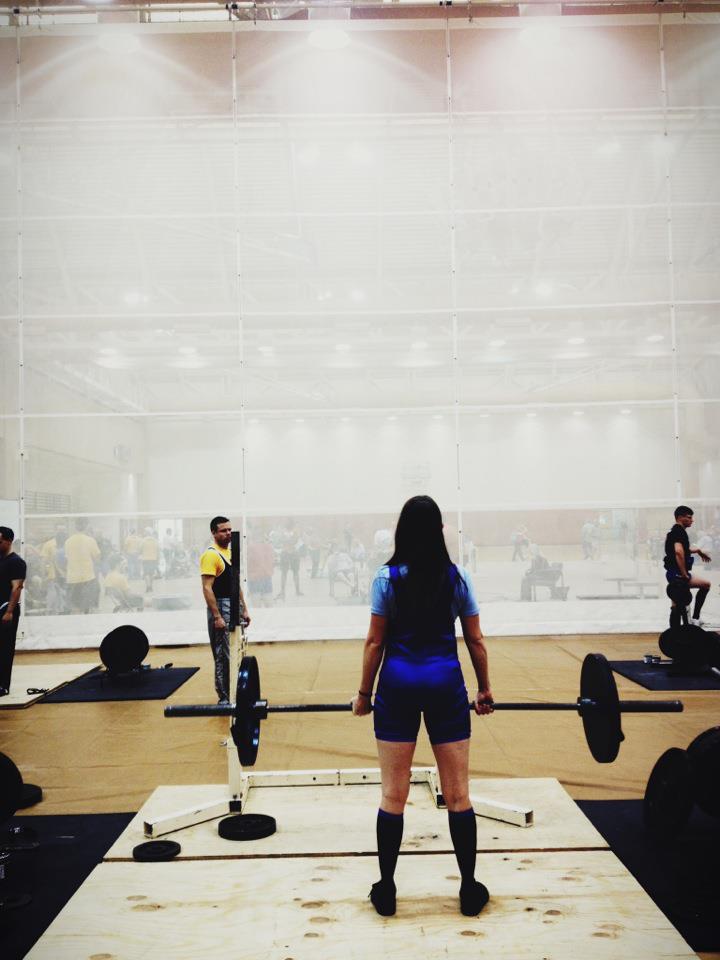
Let’s start with my special lady friend, Jessica. She’s relatively new to powerlifting, but already quite passionate about the sport. At Raw Nationals in August, she went 9/9 in the 60kg class, and was able to meet a bunch of legends, including sharing a platform with the famous Jennifer Thompson. For this meet, Jess cut down to 56kg, which had been a goal of hers for awhile. The cut was going great until the night before the meet, when a practice weigh-in at the equipment check proved that our home scale was a full kilo lighter than the meet scale. Drastic measures meant for a long Friday night and Saturday morning, and she ended up being the final morning lifter to make weight at exactly 56.0kg, with about a minute to go on the clock. This didn’t leave much time to re-hydrate before squats, and we made the easy decision to pass on her 3rd attempt to allow her to rest/feed/hydrate before benching. She ended up going 8/8 on the day, PRing her competition deadlift (125kg/275lbs), total (247.5kg), and Wilks, and then went on to help me handle several of the male lifters in the later flights. We learned some lessons for next time, for sure, but she made the best of her situation and came out smiling.

April in the warm-up room

We had two ladies in the 60kg class, both in their first official competition. April’s husband, Tanner, is a friend of mine who I really got to know at Raw Nats when I offered to help handle him, since I had another lifter in his 181 class (RoryT, who also posts on 70’s Big). I believe it was at that meet that Jessica convinced April she should also compete instead of watching from the stands. Since this was her first meet, April smartly stayed conservative with her lifts, and Tanner helped coach her to a very successful and confidence-inspiring 7/9 performance. The first meet is often the most memorable, but I have no doubt April will be setting lots of unforgettable PRs in the near future.


Dana says “gotta wear the granny glasses to see the smooth and knurling and get the weight balanced!”

Our second 60kg lifter, Dana, is a self-described soccer mom. Her daughter out-cuted everyone at the equipment check, bragging about how strong her Mom was, and even asking her to flex her guns for all of us (we were impressed). Dana didn’t disappoint on Meet day, winning 1st in her Master’s class with a 8/9 performance. Her trainer at the gym, John, is an experienced (and ox-strong) powerlifter, and he set her up with a nice spreadsheet beforehand, so she had all of her attempts and even warm-ups planned out ahead of time. He wasn’t able to attend the meet, so I helped her out in the warm-up room (when, inevitably, timing always seems to go wrong), did my best to help settle her nerves, and everyone cheered her on for her big lifts. She ended up with a very nice 262.5kg total and an impressive 297 Wilks.

Sarah will kill me for using this picture.

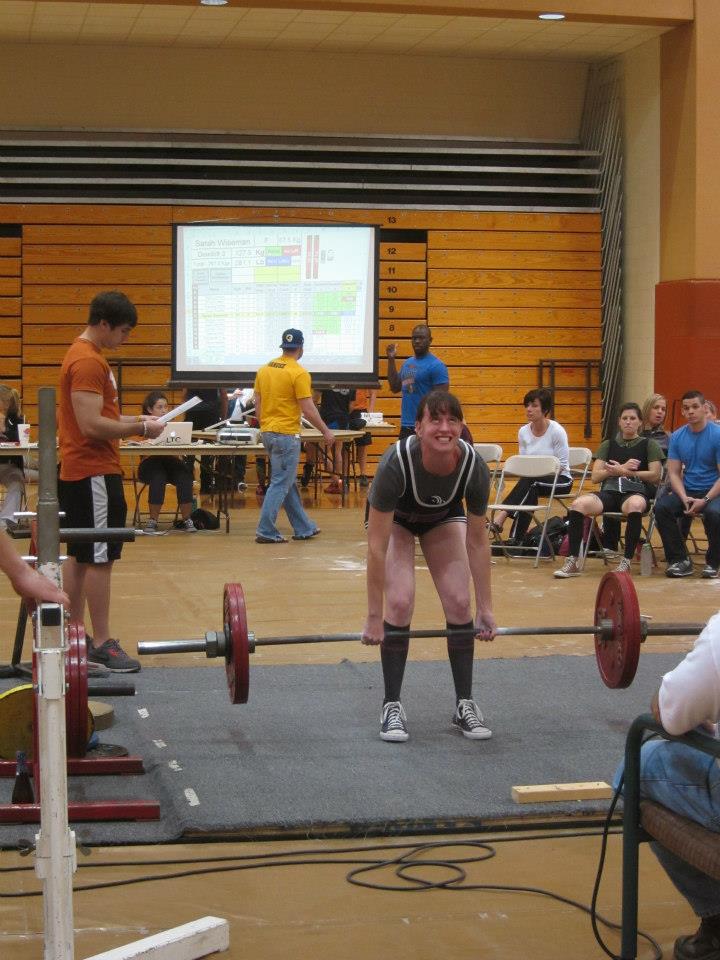
We also had 2 more female lifters, both in the 67.5kg class. Neither of them had to worry about making weight, and ended up on the lighter end of the class. Sarah has competed in one other USAPL meet, and is a helluva lifter, though you’d never know it based on her Master’s degree in being a Librarian, or something along those lines. She and Jessica tend to talk a lot of smack in the gym (In actuality, Jessica does 90% of the talking, and Sarah just smiles and squats), and they have a very friendly rivalry that helps push them in a positive direction. Sarah ended up going 8/9, and I believe she PR’d her bench and deadlift. When contemplating what to call on her third dead, Sarah asked if she should go for 275 or 281. Jessica’s response was something along the lines of “If you don’t get 281, I’m going to punch you.” Sarah did, and in doing so, ended up beating Jessica’s Wilks score by 0.3 points (291.51 to 291.21). This rivalry has just begun, and will be a lot of fun to watch in 2013.

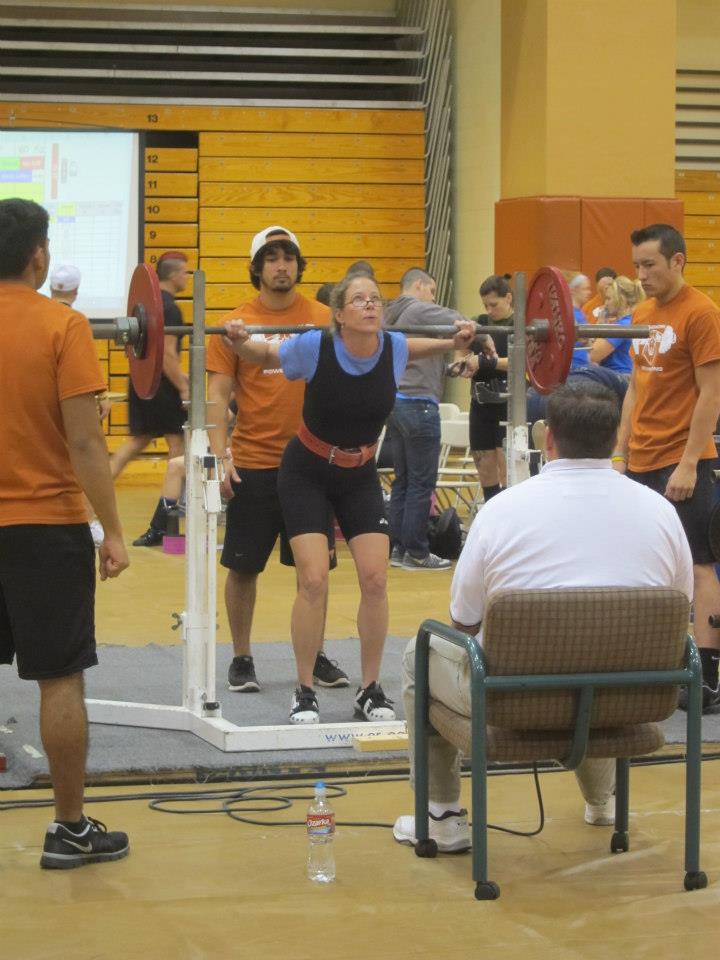
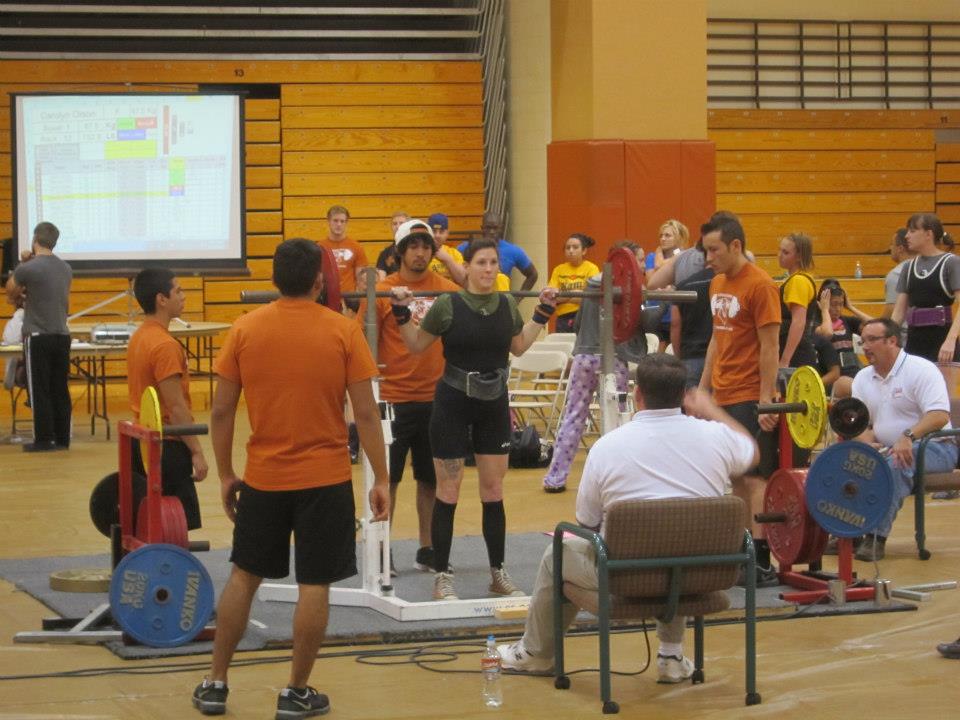
Carolyn killing a 226lb squat.

Our final lifter, Carolyn, turned out to be the surprise of the group. She’s an awesome and strong gal for sure; we all knew that. What we didn’t expect was that she would show up and and deadlift 330 pounds in her first meet! Her special guy friend, Eric, also a national level lifter, has only been coaching her in powerlifting for a couple months, but she showed a lot of talent and poise, and destroyed some serious weights, resulting in a 9/9 performance for a 310kg total and a 331 Wilks. Very impressive!

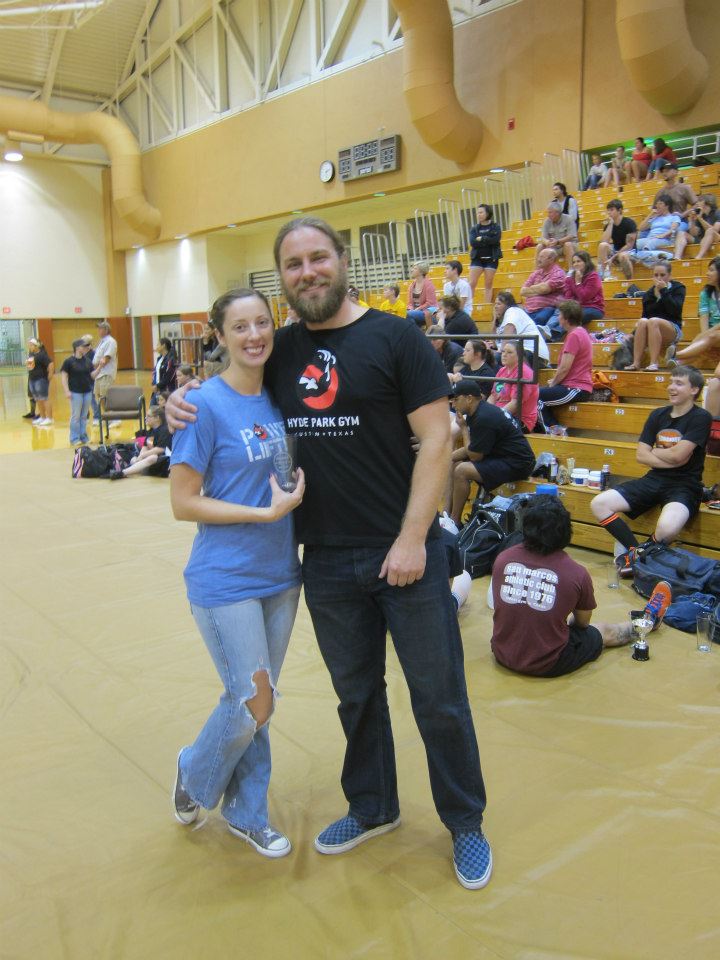
Jess showing off her trophy, and her proud Coach.

The point of this post is not only to brag on my female friends at the gym, but to urge more of you to compete. The first thing I usually hear people say is “I’m not strong enough!” That’s bullshit. These ladies are all of various strength and experience levels and I can say without a doubt that every one of them had a great time, and I know most of them are already planning to compete again in the near future. It’s important to prepare for your first meet, but it’s even more important to sign up and do the damn thing. All of these ladies ignored potential excuses, signed up, showed up, and lifted their asses off, and now they have a ton of fans, friends, and even rivals who are eager to see what they’ll do in their next competition. The bottom line is that competition helps you set and achieve goals, so get out and do it.