
Dr. Kilgore — Anatomy Without A Scalpel

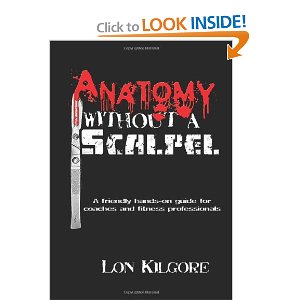
Dr. Lon Kilgore is a patient, intelligent, and innovative man who continuously campaigns against conventional fitness wisdom and has mentored plenty of lifters, graduate students, and schmucks like me. He is releasing a fantastic — and incredibly practical — anatomy book entitled, Anatomy Without A Scalpel. This book is not only well put together with unique photos and drawings (Lon is an excellent artist on top of having a doctorate in anatomy and physiology), but it also features me as one of the models (no speedo, sorry). Dr. Michael Hartman was a graduate student of Dr. Kilgore and interviewed him about this textbook. Here are Dr. Hartman’s Blog and Dr. Kilgore’s store, book, blog, and site. I highly recommend the anatomy book and hope you enjoy the interview. If you have any questions, you may leave them in the comments (I can get a response from Dr. Hartman or Dr. Kilgore if they are good questions).

The following is quoted from part I and part II of Dr. Hartman’s blog that hosts this interview in its original form. These are just highlights and the full interview can be found in part 1 and part 2.

On how this book can help a trainer or coach:
A trainer should be able to use the information presented to produce a better and more efficient training plan for their charges. You would not ask a mechanic to supercharge your engine if you knew they did not know how your engine was built, how it turned the wheels, or what tools they needed. A trainee is paying the trainer to “supercharge” them and it is incumbent on the trainer to know the nuts and bolts of both the trainee’s body and the tools (exercises) they use.

A trainer should also end up being better able to identify which muscle or anatomical feature is presenting pain or soreness during or after training. If you don’t know anatomy, you can only guess at the site of the problem or hope that you can create a solution that works. Anatomical knowledge takes out guesswork and prompts correct solutions.

On how this book helps a trainee:
A trainee that trains himself would reap the same benefits as a trainer. Their exercise selection, programming, and assessment of problems will improve. For a trainee who is paying a professional trainer, it can serve as a means of assessing whether the trainer is providing your money’s worth.


On the content of the book:
The book is 324 pages – 310 pages of chapter content. I believe there are about 525 individual photographs and illustrations. About 1/3 pencil illustrations and about 2/3 photographs.

One (very good) reason why this book is different:
The other difference is in the level of explanation. The most popular exercise anatomy book in print has about 400 illustrations on less than 150 pages. Its just images with bullets and blurbs of text – very pretty images though. I’ve added a great deal of explanation on how to find the various anatomical structures along with information on why they are important and how they function in the real world.

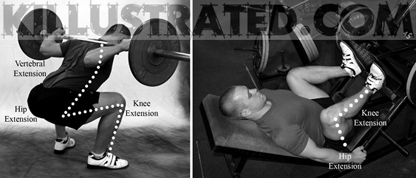
Example of drawing over picture from the book
Tuesday

Haven’t been on a computer much over the holidays (except to post on this site). Traveled yesterday, so I don’t really have anything for you today. There will be a chat room today at 5:00 EST (it will be done before tonight’s bowl game).
Chat Room Link
Note: When you enter the room you have the option of changing your name. Go ahead and change it lest you get a generic name.

If you have Facebook (and can get on at work), then check out the 70’s Big Fan Page (small updates are posted there on a regular basis).

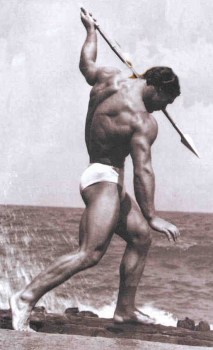
Otherwise, let’s use the comments to talk about whatever. I’ve been mulling over some different ideas for the site, including a short podcast. I’ve got some video to edit from hanging with AC as well as Texas Method posts to write. Here’s a picture of:

John Grimek


Pissed

My mom likes to leave the tv on as she goes through her morning routine. One show called “The Doctors” pissed me off this morning. For those of you who don’t know, there is a medical doctor, an OBGYN, a plastic surgeon, and a pediatrician. Today they were giving fitness advice, and it was a fucking joke. Let me clarify something: just because you are professionally called a Doctor — even if it’s a Doctor that treats the human body — it doesn’t mean you know dick about fitness or exercise.

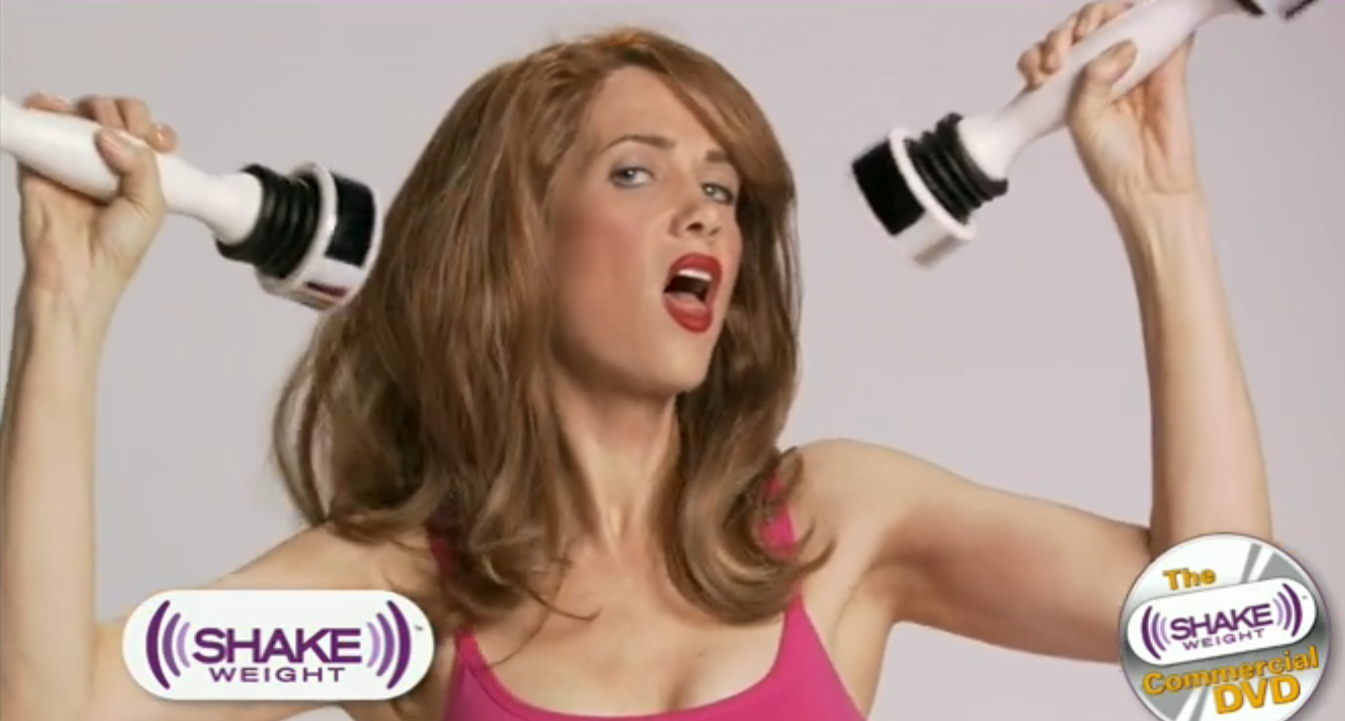
These hosts of the show were demonstrating some kind of vibrating machine that you stand on. The main host, who is a young pencil-neck medical doctor, was sitting on this vibrating machine and said that it “really engages your abs”. I started cussing at the TV. A second later he pulled out a shake weight, and I left the room. Later, the OBGYN — who, by definition, inspects vaginas — was telling people to do wall sits in order to build muscle and burn fat (not to mention her own knees weren’t at a 90 degree angle, which was one of her requirements in her “explanation).


Here’s the problem: we all know that this stuff is bullshit. I can make fun of these idiots every day, but it won’t matter because the viewers that buy into this malarkey don’t know the difference. It’s your responsibility to educate other people on what is or isn’t worth a damn. That means it’s your responsibility to learn not only “what to do”, but “why to do it”. I try to go over this stuff regularly so that you’ll have a conceptual understanding of the “why”, but I only reach three or four thousand people a day. There are millions — fucking MILLIONS — of people who now think wall sits will build their glutes.

I don’t want you go about this like an asshole, though. You need to respectfully inform — you know, teach them. If you go and say, “Oh, that’s a bunch of bullshit. You need to do this”, then you just drive people away. You owe it to people in your life, particularly those that you care about, to help them get on the right track. They all aren’t going to start squatting two or three times a week, but if they learn why compound strength movements not only build muscle, but that muscle helps burn fat, they may want to change their habits. But then again, most people are hopelessly stupid with their health. We can still try to help anyway by teaching, not bashing. Good luck. I’m here if you need help on how to do it.

Q&A – 1

I’m going to be hiking with my pup early Thursday morning, so here’s a quick Q&A.

From yesterday’s comments, aramirez asks

Reading about conditioning brings up a question I have had since I read the longevity and being active article a few weeks ago. I sit behind a computer all day. I train three times a week doing the main lifts (squats, press, bench press, deadlift, etc). No cardio, no conditioning. My cousin who is a conditioning/strength endurance guy, says that heavy weight training alone three times a week is not enough to maintain overall health. He says even though my strength and muscle mass is increasing, my cardiovascular health is not being trained therefore I am still prone to cardiovascular issues. Is this true? Taking extrinsic factors such as smoking, drugs, family disease history, etc. out of the picture is a cardio training component needed for overall health and longevity, or is weight training three times a week enough?

The first question I have is, “What is aramirez training for?” I get tons of questions — so much that I have been backed up on e-mails for a couple months now (the chat room is a way to get an immediate response). Over 90% of the questions are vague to the point that I can’t answer them without asking questions in return. If you are trying to get advice on inducing adaptations in your body — whether it be programming, exercises, food intake, injury issues, recovery issues, “mobility” issues, etc. — then I’m gonna need adequate information to give you an opinion on the matter. “Adequate information” means what you’re training for, what you’re currently doing, and current state of adaptation. Perhaps you don’t know how to identify some of those things (I guess I’ll give them operational definitions later), but make an attempt if you want a quicker, more concise answer.

With that being said, I will go ahead and assume aramirez here wants to get stronger while at the same time maintaining good health. He may participate in some kind of strength-related competition at some point, but we’ll go ahead and assume it’s a hobby. I’ll also go ahead and assume he isn’t “hardcore bulking” — a term I will use to explain someone who is completely committed to gaining weight (with a properly volumed program) quickly. People who should be “hardcore bulking” are skinny guys who are 90’s Small (it makes them more likeable). In any case, we’ll assume aramirez is your average strength training guy who wants to continue getting stronger with consistent barbell training over time, but wants to be healthy and doesn’t want his health to suffer.

In such a case, yes, conditioning is in order. Now, I don’t know what his cousin does (I don’t care), but aramirez doesn’t have to do anything fancy to maintain health. This is why retired or older lifters love the prowler so much; it’s something that stimulates their cardiorespiratory and vascular system to produce an adaptation, but it isn’t something lame like “jogging” or a LSD type endurance. It’s important to note several things:
1. A guy who just wants to maintain health doesn’t need a whole lot of conditioning, and doesn’t really need more than a day of effective conditioning.
2. The prowler meets the qualification of #1, but the prowler is also a supreme conditioning tool that can help a trainee obtain high levels of conditioning ability.
3. The prowler isn’t a requisite. You can use your car, assuming someone is behind the wheel and/or you aren’t rolling it towards a cliff.
4. Pushing things like a prowler or burning vehicle aren’t the only options. You can do higher rep sets on timed intervals with big lifts (think squat, deadlift, and power cleans). You can do barbell complexes. You can do lower rep callisthenic complexes. You can run intervals. You can combine these things with jumping if you want to feel more athletic.

Yes, some conditioning work will be helpful to maintain cardiovascular/respiratory health. No, you don’t need to think really hard on what to do or when to do it. Just throw it after one of the harder workouts, but don’t put it on a day before a harder workout (even if it’s your rest day from lifting). One day a week is fine for a guy who just wants to maintain. Two or three workouts can be used by a guy wanting to build a little conditioning. Four days a week is not necessary, unless you’re training for something. The priority is keep it short and intense, and don’t interfere with your lifting. If you disrupt recovery for strength training, then you are this guy:


Quick

I’m out and about, so here’s a quick thought. In the chat room last night there was a mild discussion on nutrition. Someone asked how to lose their gut in order to get stronger. Realistically, if you’re unhappy with your bodyfat (if you’re fat, and everyone knows it), then you need to make modifications in your overall diet. If you’re still eating processed foods, drinking soda, and eating sugary foods, then doing any kind of fat loss diet is irrelevant. Drop the shitty foods from your regular diet and then get your macronutrients under control. If you don’t know what that means, then you have some reading to do. If you are skinny or fat, you have done something your whole life to be skinny or fat. Therefore, you have to do things differently to no longer be that way. Start the overhaul now.

Dr. Michael Hartman joined us in our chat last evening and was particularly helpful with Olympic weightlifting questions. This is his website/blog — there will be new additions in the new year (updates slowed as the professor obligations increased in the fall semester).

Lastly, go and read yesterday’s post. That concept needs to be reiterated to a lot of people.