A while back we had some demographic polls to find out that 70’s Big was a big fucking sausage fest. Hopefully it isn’t…as much. In any case, partake in the polls. If you have any suggestions for today’s group of polls, put them in the comments.
[poll id=”19″]
[poll id=”20″]
[poll id=”21″]
[poll id=”22″]
[poll id=”23″]
[poll id=”24″]
[poll id=”25″]
[poll id=”26″]
[poll id=”27″]
Real sports are ‘competitions’. CF is not a sport and therefore does not qualify as ‘competition’ for this poll.
Update version 1.4
Updated weightlifting shoe links
[spoiler show=”Show past updates” hide=”Hide past updates”]Update version 1.31
Added singlet, shoe (Canadian) and belt (UK) links
Added section on knee sleeves
Added section on chalk[/spoiler]
I get questions periodically on singlets, belts, shoes, etc. This post will link to some older articles, touch on some important points, and open the forum for the input of the readers. Let’s make this a comprehensive gear post where someone can learn about, compare, and find links to various products. It is important to note that 70’s Big is open to advertising for companies that sell lifting gear. Also, you’ll notice that we aren’t talking about squat suits or bench shirts because they are fucking irrelevant (more on this another time).
Shoes
Read about why lifting shoes are important here.
Summary:
Shoes will improve efficiency and safety when lifting.
1. The sole is wider, thus more stable (an important reason why lifting in Chucks is inadequate).
2. The sole is made of material that increases the coefficient of friction when articulating with the ground so that you don’t slip. This is obviously imperative when Olympic lifting but still useful for squatting.
3. The upper is typically made of leather as opposed to canvas, thus it is more stable when compounded with…
4. The metatarsal strap(s) help hold the feet in place to prevent foot-in-the-shoe movement. This is, again, imperative with Oly lifting, but incredibly useful for squatting.
5. Most importantly, the additional heel height (of about .75″) improves mechanics for squatting and pulling. The angle change in the ankle reverberates to the knee and subsequently hip to have a better balance of musculature around the knee and hip. When someone squats in lifting shoes for the first time, it always — ALWAYS — looks better.
6. The sole and heel are made of non-compressible material which prevents any spongy bounce from redirecting the force you are trying to apply into the ground. Yes, Chucks compress. Running shoes are ignorant; each rep is a new experience because of the cushioned sole. Not to mention those shoes don’t have the other qualities already listed.
Shoe Brands
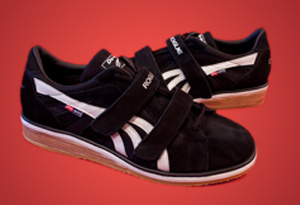
Some times shoes are just called “lifting shoes” and other times they are specifically called “Olympic weightlifting shoes”. In either case, you’ll want the slight heel like the picture above. Avoid any that have a heel larger than one inch. Brands include Risto, Rogue, Pendlay (not direct link), Nike (another), Adidas (or try here), and VS Athletics. Here’s a site that has various brands.
For Canadian buyers.
Some of the shoe brands only list one of their shoes. If you want to post a link to other brands, or a greater selection in each brand, do so in the comments and I’ll edit the section.
Belts
I’ve written about belts a lot, but I still get workshop attendees who don’t understand why they are necessary (same with shoes). Here are four links to information on belts with varying levels of detail. One — Generally speaking Two — types of belts Three — how to break in a belt (video) Four — a detailed post, look here for best info
Summary:
A belt most certainly does not “turn the abs off”, but instead makes them stronger to help aid in the Vasalva Maneuver, or increase in intra-abdominal and thoracic pressure that protects the spine in lifting. A belt functions on the abdominals, not the back. Thus, belts that are narrow in the front and flared in the back are irrelevant. The slight constriction of trunk volume by a belt with the same breath of air (a big breath) will result in increased pressure compared to no belt (volume down, contents same = pressure up — Boyle’s Law). The abs contract harder isometrically into the belt and get stronger quicker. Not only are the muscles getting stronger, but the additional pressure increases efficiency and safety. By choosing to not be safe and efficient, you are not only limiting your strength improvement, but doing so with crappier form and a higher potential for injury. Probably something you should think about.
Brands and Types
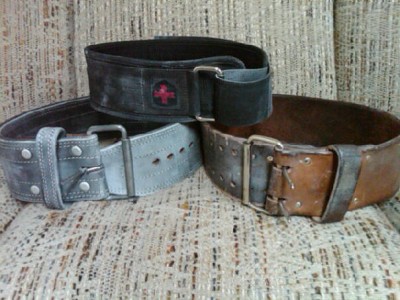
Good belt websites have changed a bit since this site has been active and I haven’t had to buy one lately, so I’m unfamiliar with the market. Please post belt sites to the comments with some quick comments. It’s important to note that suede belts are used in strength training (including powerlifting competitions) while the velcro belts are typically only used in Olympic weightlifting. Also, in some powerlifting federations you can’t wear velcro belts. Best Belts Safe USA For the UK
Pulling Straps
Unless you’re pulling well over twice your body weight or have been lifting at least for several years, you won’t need to worry about straps. If you are, then I always look to Iron Mind for straps. The world’s strongest men use them. I mean that literally, they use them in the World’s Strongest Man Competition. There are various kinds of various lengths fit for Oly lifting (the shorter, sewn kind) or heavy fat bar pulling. Iron Mind Straps — Note that there are two pages
If you have used other straps, feel free to post the brand links to the comments.
Singlets
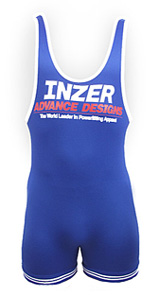
Singlets are necessary for competition. Styles and colors can vary; Olympic weightlifting are typically spandex material with longer legs and powerlifting singlets typically have shorter legs. I will point out that singlets are made of stretchy material and it’s better to have a singlet that’s a bit too small than too big. I’d suggest getting a size smaller than what the company fits you for — I bought one that was a bit too big and the straps irritatingly slid around (of course it was too small for my thighs).
Knee Sleeves
Knee sleeves aren’t required, but some find utility in them. They provide some stability and proprioception feedback that will help the lifter feel more comfortable. More importantly, they will trap heat that the leg is giving off to keep the knee warm. This will provide external warmth (as opposed to internal via blood flow) to the superficial ligaments and tendons of the knee, particularly the patellar ligament and tendon. When these structures are warmed, they are more pliable and less likely to experience pain or be hurt. Powerlifters and weightlifters both use knee sleeves.
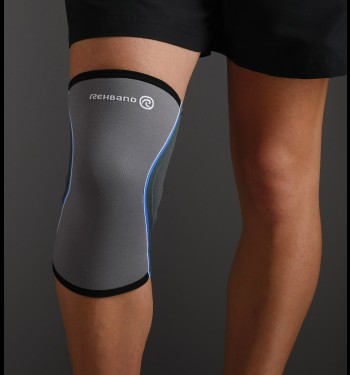
Rehabands on a hairless, 90's Small model
Rehband knee sleeves are top of the line. They are expensive (around $60 for a pair) and made of neoprene, but they will be the best warmth and support for knees. They won’t provide an ergonomic aid to the movement like knee wraps would, yet they will feel like they “help”.
The expensive Rehbands aren’t mandatory if you are having general knee soreness (which is usually caused by too much too soon, and can be alleviated over time unless there is an existing injury). I used cheap sleeves from a local sport store. They were black and a similar material to an ace bandage and were five dollars each. It provided the warmth I desired at a low cost. I wore them to nationals. It’s noteworthy that this section isn’t referring to knee sleeves with a whole over the patella (I’d prefer to not have a whole to keep the warmth in).
Chalk
Chalk is necessary for lifting, especially when sweating. It increases the coefficient of friction when your hand touches a bar. Your friends can even draw phallic symbols on your back with it. It is available in lots of places online, whether you are searching lifting or mountain climbing chalk. Most lifters will agree that having the actual block (or pieces of it) to rub on your hands is preferable to a bowl of dust. Amazon Chalk Selection
Other
If there are any other pieces of gear you think should be on this page (like supportive wrist straps), then give your thoughts in the comments. Feel free to comment on brands that you actually own so that potential shoppers can get objective feedback. Don’t give your thoughts on something you haven’t actually used consistently over time.
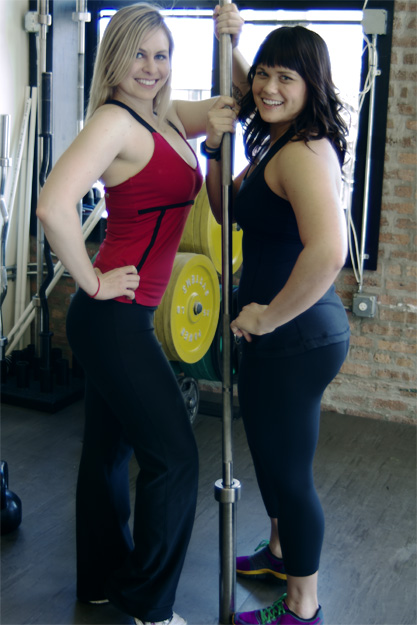
Here is the weekly installment of 70’s Big Females by Cori and Ellee.
First, we must address the issue of how to properly measure the 70’s Big Booty. Please watch our instructional video today: Measuring the Ass
*For total accuracy, it should actually take place in the nude, but for the sake of keeping it clean, we are clothed. Here at 70’s Big Female, we take ass size VERY seriously!
*For the record, Cori qualified at an outstanding 41 inches! ASSessment results: PASS. 70’s Big Female membership was made official with a congratulatory and obligatory ass slap (vital component).
Grunt. Groan. Yell. Scream.
Is it okay for women to make grunting noises while lifting? We are going reply with an emphatic YES and here is why. Have you ever pinned yourself under a clean and couldn’t get up? Grabbed on to a deadlift and tried like hell to pull yet to no avail? Have you had to aggressively finish your pull on a snatch in order to get under the weight? Did you clench your gut and let out a whelp? If you didn’t, maybe you should have. If you did, we bet it felt really fucking good. It’s not just about making beastly noises and showing that you are the alpha female. Part of the grunting is you performing the Valsalva maneuver.
You are basically restraining your airway during an attempted forced expiration against a closed glottis. This keeps air from escaping your lungs, and the muscles of your abdomen and rib cage contract. This creates rigid compartments of fluid in the lower torso and air in the upper torso. The advantage is increasing the rigidity of the entire torso, making it easier to support heavy weights!
Once you hit that sticky point, go ahead and release a tiny bit of that pressure with a hearty groan. Part of grunting, screaming, whaling, etc can be vital to making some of your heaviest lifts! In addition, you can spare yourself from those occasional, unsightly petechiae (broken capillary blood vessels) around your eyes. Better yet, you may avoid keeling over like a woman of the 16th Century whose corset is too tight. We may be ladies, but we are not delicate flowers!
(Editor’s Note: The groan, grunt, scream, or forceful exhaling with the tongue on the teeth will temporarily spike intra-abdominal and thoracic pressure but will relieve a bit of the blood vessel pressure, hence the reason you should do it if you’re about to white out or pass out in the hardest part of a lift [locking out DLs, sticking point of front squat, etc.])
Okay so maybe you are feeling a bit self-conscious and aren’t comfortable showing off your alpha female yet. Fine, but we dare you to give it a go. When you start making crazy faces and wailing like a banshee the weight on the bar is no longer an issue. Not to mention how incredible it feels to just unleash the inner she-beast and scream during most acts of physical exertion and exhilaration. Fuck the neighbors!!! But we digress . . .
70’s Big Female Tasks of the Week:
1. Let it out! Show us what you got! And then tell us how it went and how amazing your lifting was.
2. Make sure your ass has been legitimately measured. Remember, at least 38”!
3. Love your body as much as possible and to celebrate, walk around your domicile in the nude!
Training consistently is a learning process, an active process of introspection. Getting stronger isn’t easy. It requires a laboring, painful work that will only be expressed in the next bout of laboring, painful work. Yet with strength training, that process is just as important as the end. Choosing to do something hard — of your own volition — puts the mind in a vulnerable state. It forces you to decide whether or not you think you’re capable. Want to complete a set, but don’t think you can? You won’t. Staring down the bar, daring it to beat you and knowing that you will crush it; that is something entirely different, my friends.
It isn’t about merely attempting something that is Very. Fucking. Hard. But shifting the mindset into not just the possibility of completion, but the explosive dominance and subsequent victory you’ll have over that barrier. The mindset itself is the victory. The destruction of the set is the victory lap. The weening moments after when your heart is still racing and short of breath — that’s standing on the podium. Learning how to give everything you have mentally and physically to achieve your goals is what getting stronger is all about.
These vids are necessary. A lot of you have seen Benedikt Magnusson pull 1015 in just a built, but we my as well make it official on the site:
Some of you have been asking about conditioning. Here’s a friend of mine getting a righteous fucking AMNAP in. Be sure to progress your structures into it.
Oh, and then Bennie pulled 575 for as many reps as possible. Why? CAUSE HE FUCKING CAN
And Jesus Harold Christ, look at these assholes with a 150 lbs dumbbell (Note: second cameraman is a huge Starrett fan, so his comments are in admiration, because Kelly is the fucking man):
70’s Big Workshop Interest
If you are interested in hosting a 70’s Big Programming Workshop, then shoot me an e-mail or post it in the comments. I’ll send you the information about the lectures and lift around.