1.Here is an interesting article that will be useful for a very small percentage of you. I’ll explain why in a later post, but it’s an interesting read.
2. I’ve explained this in a comment, but not everyone reads all of the comments.
I’m not hurting for writing ideas. When I write something for the site, I’ll write out my draft, then go back through it at least once and edit it to make it more concise and vigorous. The process of writing a simple post takes, at the minimum, 30 minutes for a useful and entertaining article (the average time would be over an hour). There are times when I a) don’t want to spend my night writing a post, b) don’t have time to spend my night writing a post, and c) am not in the mood to be moderately entertaining in the post. Hardly any of you care when I write about something in a dry manner (although its application is very useful for you — example). The two posts with the highest page views and individual visitors are this and this. The first post is me in a speedo and the second is Rachel in a sports bra. That’s totally fine with me (I’m amused by the former), but the reality is that hardly any of you will give a hoot unless I’m thoroughly entertaining.
If one of the above reasons occurs and I’m not planning on writing a proper article, then I’ll usually post a video, picture, or story as a filler. I’ll remind you that this website has posted five days a week for over a year, and I don’t have much compensation aside from the fact that I’m helping a lot of people. I’m not asking for anything, I’m just pointing out that it’s a variable in deciding whether or not I’m going to spend an hour or two out of my day providing daily content.
Luckily you can do something about this. You can send me videos, pictures, stories, questions, testimonials, and the like that have anything to do with 70’s Big (literal or allegorical), strength training, food, conditioning, fitness, women who train, etc. This will give me “filler” content in between posts where I actually do write out an original article/post.
I was at a fitness facility a few weeks ago and (aside from people half squatting, which drives me insane), there was a guy making lots of noise. He was in his forties, and every single movement (whether he was picking something up off the ground or completing a rep) was accompanied by “Eeeeeeeeeeeeh, sahhhhhhhhh!”. When you say the “Eeeeh!” part, make it come from the depths of your throat without the guttural addition — kinda like when an umpire calls a strike (“Streeeeeeeeeh!”). The second part, the “sahhhhh”, is comparable to the noise you might make after taking a sip of delicious beer (mmm, beer). However, you add on the sharp “s” noise at the beginning which is comparable to the beginning of the word “sayonara” (the Japanese word that has become slang for “see you later, mother trucker”). Both of the sounds were done at a decibel level equal to that of an exuberant third-strike-umpire, and it was audible across the facility.
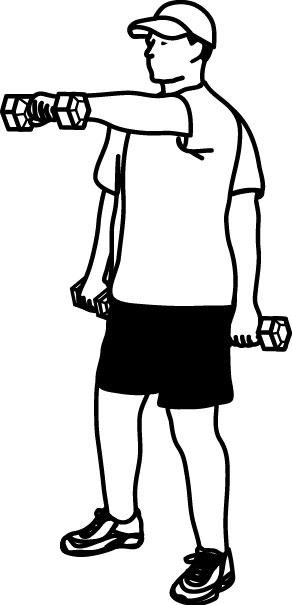
Only people with three arms are allowed to do front raises
I would consider this unacceptable even if he was doing a heavy set of squats, but the guy was doing…front dumbbell raises. This irrelevant exercise doesn’t garner enough energy to emit strange sounds, much less warranting the noise of an intense Karate fight. Making excessive noise in a fitness facility, “gym”, or gym is lame because it means you want attention. If you were wanting attention, you could roll your sleeves up and wear shirts with jewels, crosses, and skulls on them like everybody else.
Non-excessive noise is acceptable if and only if you are experiencing high intensity. This would require a high percentage of your max or lots of reps (i.e. > 10) with a significant percentage of your max. I’ve grunted when lifting before, but I think the only time I’ve ever screamed was when I hurt my back at the bottom of a rep and squatted it up so I didn’t kill Chris and the other spotter. If you’re in a public facility, yelling unnecessarily is annoying and stupid. If you’re in your own facility then yelling is not only acceptable, but encouraged. Excessive yelling should be accompanied by loud Led Zeppelin, round house kicks, and big weights. If you are yelling about a light day, then you are saying, “Look at me! I have a teeny peeny!”
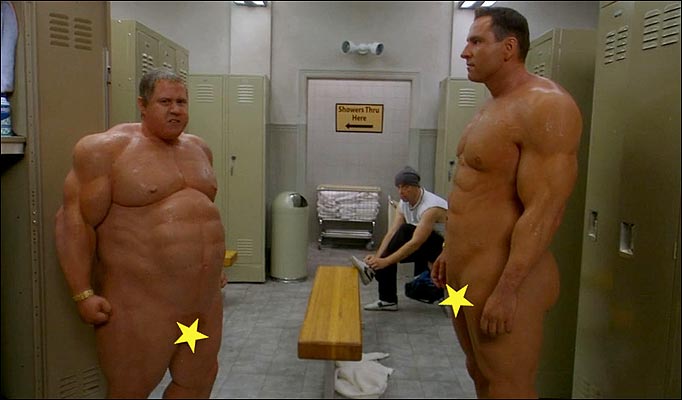
Image from Little Britain, a British comedy show that is better than whatever you watch on TV.
PR Friday is a time to rejoice in any personal records you hit in the past week, update everyone on your training, and ask random training questions. Chances are other readers can help, and if not I’ll provide my own opinion. Good day to you, sir/madame.
I’ll add stuff to this throughout Friday, but the following video has nothing to do with 70’s Big.
Update: I said I was gonna add some stuff, but I’ve got nothin’. I’ve been doing this for over a year every week day, and unless I write an in depth post, I’ve got nothin’.
Awesome quote: Evan: Do you cycle (insinuating road biking)?
Dr. Metzler: Periodically.
Periodically I get questions on whether or not the “butt wink” is an issue. The first thought that comes to mind is “who the hell thought of the term ‘butt wink’?” Winking requires the closing of an orifice, and everybody knows that in order to close your outer sphincter, you have to clench your butt cheeks together. You can’t do this while squatting, and if you do, you’re doing a half squat. So stop, god dammit. Editor’s Note: Yes, there’s more than one sphincter. What?
2nd Editor’s Note: I don’t recommend Google image searching “butt wink” with the safe search “off”.
How awesome is this picture?
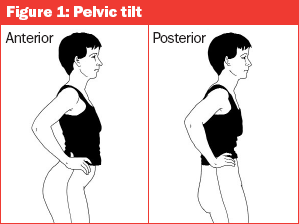
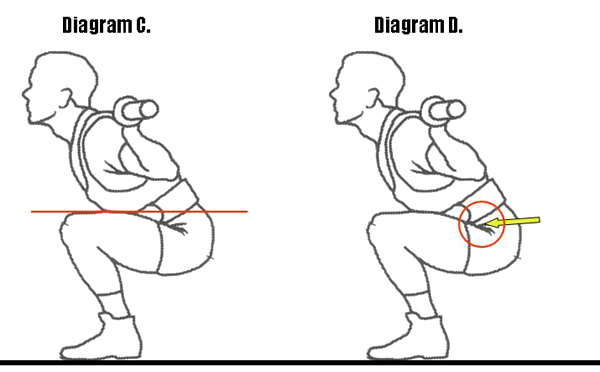
The butt wink is a made up term to refer to the alleged posterior tilt of the pelvis at the bottom of a squat. Posteriorly tilting the pelvis is the same motion you’d make if you wanted to hit your pubic bone against a wall (guys will probably crush their junk in the process). It’s important to note that observed butt winks are McCarthy’d when a person is doing a body weight squat (i.e. without a barbell). During a body weight squat, the trainee is told to keep their back in hardcore extension to avoid the wink. There are a few trainees that need this kind of cuing to achieve a proper spinal alignment, and those who don’t get in the habit of over-extending their thoracic and lumbar spine. The body weight (BW) squat is commonly (and incorrectly) taught as a precursor to a barbell squat, and the progression is misleading since they teach incorrect extension and mechanics during a barbell squat.
The BW squat is an incorrect first step because of the means and the end. The mechanics of it are unimportant since it isn’t loaded with additional weight and the squat itself is routinely executed safely after dropping a deuce everyday (two or three times if you’re me — yeah c’mon). It is also used as a conditioning tool — NOT a strength builder. Trying to claim that the BW squat will build strength is like saying non-alcoholic beer gets you drunk. Floozy.
Every person’s body dimensions will not be able to fit the mold of an “upright torso” anyway. A person with long femurs and a short torso must lean over when squatting all the way down in order to manipulate their body to have a stable center of mass (unless they are wearing Lady Gaga’s heels). Furthermore, some trainees won’t have the flexibility to get to the proper depth in a BW squat. If the same trainee places a barbell on their back, it provides a little more external resistance that helps push them down into proper depth. This is similar to PNF (proprioceptive neuromuscular facilitation) stretching; elongating a muscle as it attempts to provide a resistance to the stretch. A trainee in this situation is not using enough weight to cause harm (anywhere between 45 and 95 lbs), and in fact the weight is helping them achieve proper depth, let their muscles stretch, and working all of the muscles around the knees and hip through a full range of motion. A coach who has their thumbs anywhere but in their ass can easily teach this correctly.
The above addresses the lack of logic in battling against a “butt wink” in a BW squat and dealing with an inflexible trainee, but what about the wink itself? Does it happen under a load? If it does, should we all be concerned? Frankly, I’ve never had a situation where there’s a “butt wink” worth worrying about. Lifters should be taught to shove their knees out when squatting, whether they are doing high bar, low bar, or front and overhead squats. Shoving the knees out avoids any impingement, bony or soft tissue, and is explained in detail by Mark Rippetoe in several sources. Not shoving the knees out is probably the culprit for most “butt winking”, so the point is almost moot.
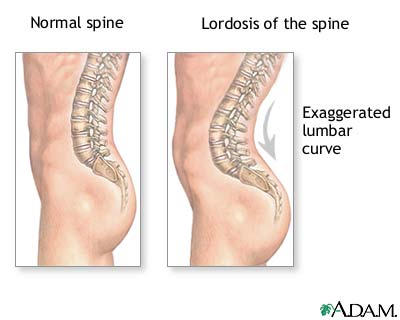
Let’s say there is a little “winking” (I keep putting it in quotes because the term is fucking ridiculous) going on when barbell squatting. It’s unlikely that it’s caused by tight hamstrings since those hamstrings are allowing a full depth squat (with knees out). There are two reasons I’ve thought of for this happening. The first is related to the “over extended back thing” that is taught in the BW squat. If a trainee over extends their back under a load, the spinal column is now in an inefficient position to transfer force. There are two points where problems typically occur: where the thoracic spine meets the lumbar spine, and where the lumbar spine meets the sacrum. If either area is “over extended” tremendous forces are no longer passing through them to the pelvis (and subsequently legs) and instead are pinching the posterior and opening the anterior portions of vertebral segments. Not good.
You can do this all day with a BW squat.
Don’t think it can happen? Well it does. Aside from hearing about it regularly, a 70’s Big reader recently wrote in and told me they herniated a disc because they were trying to over-correct the horrid “butt wink”. That’s a damn shame. You need your trunk to be straight when lifting so that your spine doesn’t look like a parabola (one that has the y coordinate squared). A coach with clean thumbs can take care of this.
Let’s say that a trainee is taught to over-extend their back on a BW squat, and then does the same thing on light barbell squats. The weight won’t be significant enough to hurt them (and it shouldn’t when teaching squat technique), but their pelvis will naturally pull out of this over-extension at the bottom of the squat. This will appear to be flexion, and it is because the pelvis posteriorly tilts to go back into a neutral alignment because it was extended too far to begin with. A shitty coach says, “Flexion! You are banished from the bar to only perform ‘air squats’ until you get it right!”, but it’s their own fault for teaching the asinine over-extension position. This issue constitutes nearly ALL of the “butt wink” cases that occur when the trainee is correctly shoving their knees out (if they aren’t shoving the knees out, then the aforementioned hip impingement will create the wink).
The pelvis, yo.
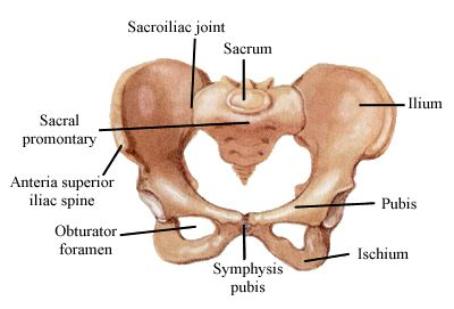
The other cause for a “but wink” could be anatomical. In coaching it is extremely important to identify different body dimensions and how they affect mechanics. After observing many limbs and trunks, I started noticing differences in pelvis length. The pelvis itself starts at the sacrum (below the last lumbar vertebrae), wraps around your sides in the form of the iliac crest, and then the pubis closes in from each side on the front of your body at a connection called the pubic symphysis. Usually pelvis variations aren’t a big deal, but if a person has a very long pelvis it alters how they look when squatting or deadlifting. Their low back never looks like it’s extended and can even look like it is lumped out, appearing to be in flexion. Instead, their pelvis may be long enough such that it doesn’t produce a fancy lordotic curve when in position (particularly the bottom of a squat and the start of a deadlift). I’m not saying this is the case all of the time, but it is definitely a possibility; it isn’t crazy to assume pelvises come in varying lengths/widths while we commonly accept that spinal columns, femurs, tibias, humeri, and radii/ulnas all vary in size and shape.
While I’ve noticed varying pelvis lengths in adults, it’s more noticeable in children and adolescents. I haven’t studied a whole lot on bone development, but this age group seems to grow femurs and pelvises before spinal columns. Looking back, the majority of kids I’ve coached are included in this anatomical observation. A trainee with a long pelvis will probably look like they are doing something wrong, but may just look funny because of their anatomy. This structural issue may be what is causing the dirty thumbed coach to shout “butt wink”.
Hopefully after learning some of the anatomy and conceptual lessons here you have a better understanding of why the “butt wink” is horse shit. In general, trainees should shove their knees out when squatting and this will allow proper depth. If a “wink” is occurring in a BW squat, it doesn’t fucking matter because it’s a Body. Weight. Squat. It’s used for conditioning and deuce dropping. When someone McCarthies a “butt wink” on a weighted squat and the trainee is shoving their knees out, that person is either a shitty coach, a pervert, or flamboyant because they are clearly staring at the lifter’s ass. Properly coached squats don’t really have “butt winks”, and if they do, I think it can be explained by their anatomy (and they aren’t a big deal anyway).
I’ve mentioned before that I’ve been exposed to a regular fitness facility for the first time in a while. People with good intentions wander around the room ready to implement either what they have read in mainstream magazines/websites, or what convoluted knowledge they’ve picked up over the years. It’s a shame that they have been misled by people who know better, but I guess it could be worse; they could be sitting at home. In any case, there are still some things that I see that make my eyes bleed. Alas! This is an unfortunate reality for many readers of this site. Hopefully my observations can prevent any readers from following suit.
In most facilities it’s rare to see someone squatting with a barbell. Hell, it’s rare to have more than one rack to do it in. It’s even more rare to see someone doing anything lower than a half squat…and this saddens me. Skinny guys weighing less than 160 pounds and wearing fingerless gloves load the bar to 185 or 225 (apparently it’s sacrilege to use the smaller plates) and bust out some hard fought half rep squats. These guys don’t have any business loading this kind of weight, and if they did an honest-to-god full squat, they would squat significantly less than my girlfriend. I’ve seen another guy who actually had some squatting experience put 405 on the bar (after I did) and squat it below the halfway point, albeit five inches high.
Shirtless, shaved, and half squatting with stop sign plates. Fuck.
If you can’t or don’t squat ALL of the way down, you don’t have any business squatting. I will personally kick the ass of any reader of this site who does a half squat. If there’s any doubt to the depth of your squat, then it was high. Yes, I’ve cut some reps off before (most people have), but making it a habit is unacceptable. Aside from looking like a complete poon, you’re wasting your time because you aren’t getting much benefit from half squats.
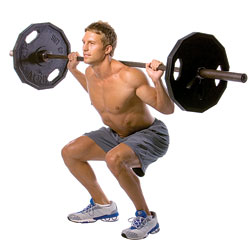
The “low bar” squat (as indicated in “Starting Strength”) necessitates proper depth. Growing up, proper depth was always considered to be at parallel (even though parallel isn’t clearly defined), but it should be thought of as the point where the hip joint is below the knee joint. Visually, that would be a point where the crease flexed hip is below the top of the knee (note: this gets harder to see when the lifter has more girth).
Lowering the hips below the knees does a few things. Specifically for the “low bar” squat, it ensures there is enough depth for the adductors and hamstrings to stretch so that they can subsequently contract with the aid of the “stretch shortening cycle“. Taking advantage of this “bounce” is vital for a strength trainee. If the depth is cut short, then the bounce isn’t possible because the related muscles aren’t stretched adequately prior to their contraction. Visually it will look like a slower rep than if the bounce occurred.
Squats at proper depth also train all of the musculature around the knees and hips through a full range of motion. There is no utility in training half of a muscle’s range of motion. Half squats at the high or low bar position handicap the lifter and severely limit their strength progression. They also make the lifter look like a fucking Nancy. If you’re gonna spend time lifting, you my as well do it right. If that means reducing the weight by as much as 50 to 100 pounds, then so be it. It is what it is.
And I don’t want to hear any shit about people doing half squats to make their lifts go up. 99% of people on this site don’t have any business dicking around with half movements anyway. Unless you’re Mike Tuchscherer, eating and squatting all the way down should be your only concern. Every time you don’t squat to depth, I pour a beer down the drain. And I HATE wasting beer.