
Glenn Pendlay of MDUSA recently wrote a pair of articles titles, “How to write an Olympic weightlifting program” (Part 1 and Part 2). They are a good review of the basic principles for Olympic weightlifting. Believe it or not, many weightlifters get away from this foundation.
For example, there are assholes online who pose as weightlifting “experts” just because they trained with some random Chinese coach for a month. This means they “understand the Chinese weightlifting” system and miraculously gained the aptitude to teach it. Whatever the FUCK that means.
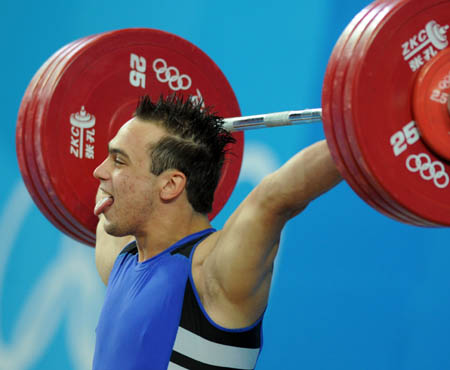
Anyway, I prefer Pendlay’s approach to weightlifting because he does it like a Socratic student who acknowledges there is plenty to learn.
“When you know a thing, to hold that you know it, and when you do not know a thing, to allow that you do not know it, is knowledge.”
–Confucius
“…surely it is the most blameworthy ignorance to believe that one knows what one does not know.”
–Socrates
Personally, I don’t think Pendlay needs to approach it this way; he could get away with being an asshole about what he knows. But that’s not his style because he honestly still learns stuff every day; I like that. Let’s highlight some of the lessons from his two-part article.
Part 1 concerns itself with snatching, clean and jerking, and squatting. Again, read the Pendlay’s articles for his explanation and reasoning, but it’s good that he took the time to point this out. So many people will watch videos of successful international lifters and decide to emulate them. Monkey see, monkey doo doo in their singlet. I wrote about this concept in a triumphant “I proved my point because you’ll click on anything that says sex and shows a bit of T&A” post, “Sexy Isn’t Always Better.”
Part 2 actually provides enough information for a weightlifter to program his training for several years. He points out how weightlifting success selects certain training principles: not doing anything greater than triples on the Olympic lifts, typically not squatting prior to the lifts, and organizing them effectively throughout the week. But one of the things I like the most about Pendlay’s message is:
Keep a workout log, and take good notes. When you change your program, try to change one thing at a time, and give the change a reasonable amount of time to work before you abandon it. Approach things in a systematic way, and with every week and every success and failure you will add to your knowledge of how your body reacts to training and what you need to do to snatch more and clean and jerk more.
This may even sound painfully obvious to some of you, but I’d be willing to bet that you recently waffled your way through what was supposed to be a systemic approach to programming. Most of you guys just want to be told what to do — JUST GIVE ME A PROGRAM.
Read Glenn’s articles, particularly Part 2, and you’ll walk away with a good vision of a quality weightlifting program. Lift heavy, but vary your work load throughout the week. Accumulate work above 80%. Reserve sessions later in the week for maximal attempts. Pick a rep scheme, whether it be singles, doubles, or triples, and try to push it for 4 to 8 weeks. Once you start to stall on one scheme, transition to the next (exhaust triples, then move to doubles). Once you do go through this cycle a few times, vary the sessions in a week. Doubles on Monday, triples on Wednesday, and then maximal stuff on Friday? Sounds like a plan — but the point is to have a plan. Like Glenn said, “Remember that success in weightlifting is defined by snatching and clean and jerking more. It is not defined by having a huge squat or carrying an impressive workload in training” or by doing a bunch of random exercises. Pay attention to guys that simplify programming. Listening to them will help you more than a fool keyboard warrior claiming secret Chinese knowledge.