
The rack pull is a great exercise for developing the hamstring’s ability to withstand massive amounts of tension to improve the deadlift lockout. I prefer to program them for “intermediates”, and usually those that are more experienced in that realm. Don’t get hung up on labels like “beginner”, “intermediate”, and “advanced”; I’m merely referring to someone that’s been involved with “intermediate level” programming (typically defined by a weekly stress/adaptation cycle) for at least three to six months. They can be used with less experienced trainees if they have a severe deficiency in hamstring involvement in the deadlift. This post doesn’t aim to be a comprehensive lesson in how to do rack pulls, but highlighting some key points.
Starting Position
Whenever I use the term “rack pull”, I’m referring to one in which the bar starts below the patella (knee cap) and at the upper part of the tibial tuberosity (the bony potrusion on the tibia that is below the patella). Other people may call these “below the knee rack pulls”. This style of rack pull is much harder to do than it’s “above the knee” counter part because it is supposed to remove the quadriceps from pushing the bar up. Instead, it’s aim is to load the hamstrings and force them to extend the hips while the lumbar erectors hold the pelvis in place. I bring your attention to this picture I drew in MS Paint to illustrate this point in a Q&A in January.
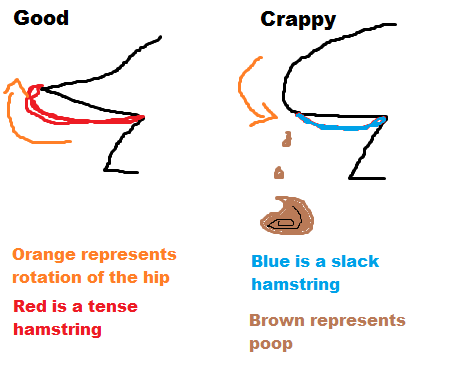
Note that the lumbar will help hold the pelvis in a neutral position to allow the hamstrings to stay stretched (left side). If the lumbar fail, then the pelvis will posteriorily tilt and slackens the hamstring (right side).
CONTINUE READING Continue reading
Rack Pull Tidbits
21